Archive

Author Archives: James Rink

03/14/2016 02:25 pm ET
  • Bojana JankovicInternal medicine physician, life long learner, speaker, educator, mother of two, wife, fitness fanatic, yogi, meditator, multitasker.

ANYABERKUT VIA GETTY IMAGES

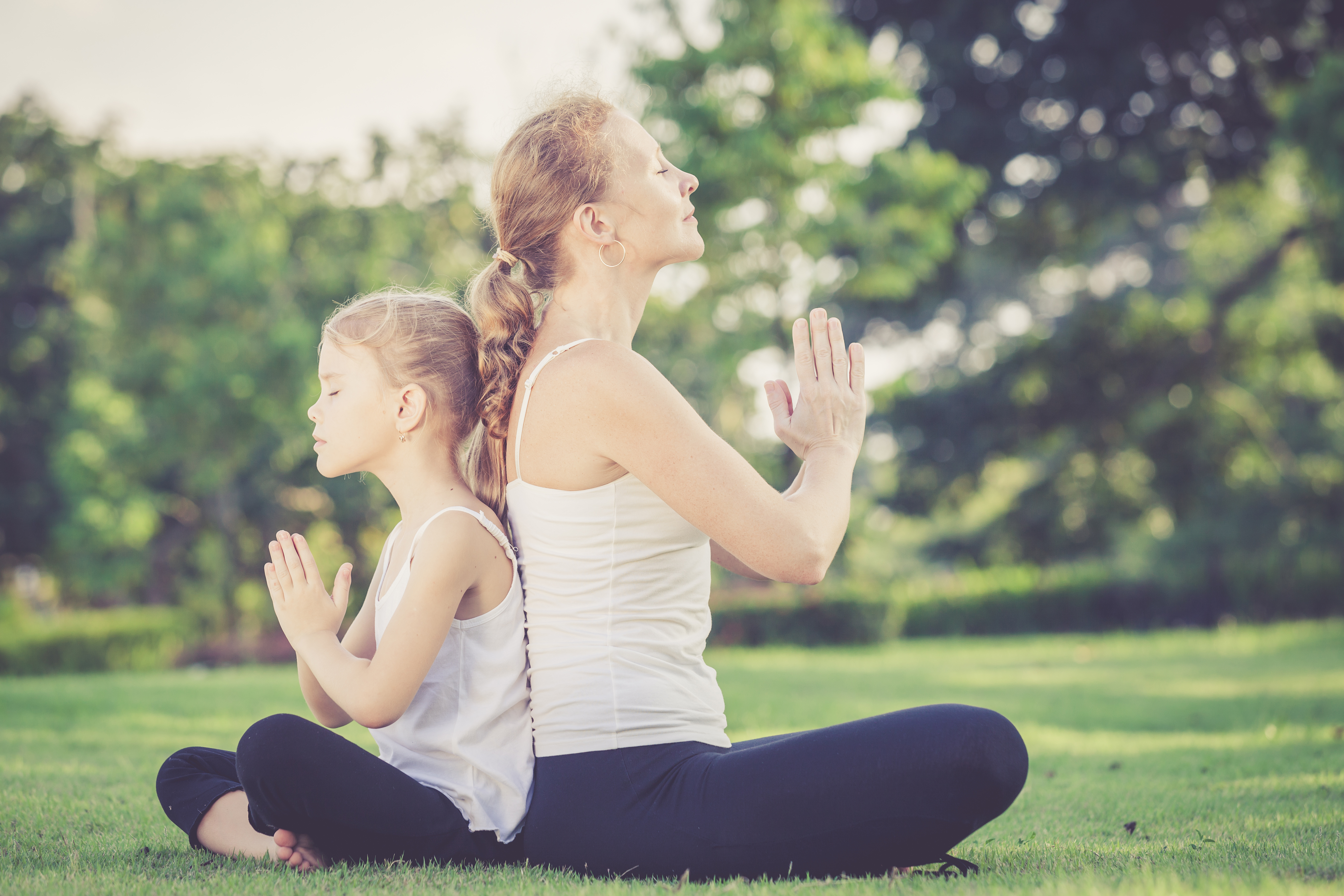
I’ll admit it: I was skeptical about meditation. If you had told me a year ago that meditation would not only be something that I look forward to, but also a practice that my almost four year-old daughter could do with me, I would have laughed in disbelief.

I am a physician who believes in scientific evidence, so I wasn’t easily swayed into trying a practice that originated thousands of years ago, before we had randomized controlled trials. Being a working mom of two, I was always rushing from one task to another and checking off my do to lists. I realized that I stopped being present in my life. I was moving through tasks, putting out fires, and not enjoying it. I knew there was so much joy and love to be present for, so I started to look at how to live in the moment and how to give and receive the beauty within and around us. I found that many of my patients were facing the same problem, and many of them developed chronic conditions in large part due to the way their minds and bodies were coping with stress. In an effort to help my patients and myself, I started reading books by Pema Chodron, Deepak Chopra and Ekhart Tolle, to name a few. I also reviewed scientific literature that addressed how meditation affects changes in the brain, helps us cope with stress, reduces symptoms of depression and anxiety, and lowers blood pressure.

After this thorough scientific and spiritual investigation, I was convinced. Instead of dipping my toe into the meditation pool, I went all in and signed up for an Ayurvedic and meditation retreat at the Chopra Center. Experiencing multiple meditations every day, a daily yoga practice and having the time to reflect and just be, was truly transformative.

I wanted to continue this practice at home. Being a working mom, coming home presented a seemingly insurmountable challenge. I envisioned myself trying to meditate unsuccessfully, while my then three year old daughter announces that she needs to use the potty, or my then one and a half year old son cries.

When I voiced this concern during my retreat, the teachers at the Chopra center suggested that I try meditating with my toddlers. In fact, one instructor told me that a child should be able to meditate for the same number of minutes as their age.

I was skeptical about being able to get three minutes of silence from my three-year-old. But then again, I had been skeptical of meditation to begin with.
2016-03-13-1457830275-3974328-shutterstock_321877532.jpg

Here is what I learned while introducing my daughter to meditation:

1. Accept your kids’ early dismissals.
In the past, if my daughter would walk into my bedroom while I was meditating, I would briefly let her know what I am doing and that it is “mommy’s quiet time”. I would invite her to quietly sit next to me, or go to her room and play. She would always choose the latter. A few months into my practice, she walked into my closet during a meditation session (Yes, I started to meditate in the closet, please don’t judge! It is the only part of the house that is semi-quiet.), and said, “I stay here. I meditate with you mommy”.

2. Lead by example, but don’t be too eager.
If they show curiosity in meditation, let them know how good you feel, and how relaxed and happy you are after meditation. Then, if they express interest, casually invite them to sit next to you or on your lap for as little or as long as they wish. If they accept, let them know that there is only one rule – while you sit together meditating, you both have to be quiet.

3. If they don’t want to be there, give them an alternative.
Once you’ve invited your toddler to join you, make sure they know that if they do not want to sit with you, they have the option to play elsewhere (as long as there is someone to supervise, of course!).

4. Create meditation traditions together, while being flexible.
A few nights after the first time my daughter and I meditated, she pulled out a pillow, put it on the floor of her room, and covered it with a blanket. She said, “Mommy, I meditate here!” I was thrilled that she is already embracing mindfulness and meditation! Since then, we have meditated together on some mornings, but I remain flexible when she chooses not to. Remember to practice acceptance and non-judgment as part of your own mindfulness journey!

5. Meditation is a wonderful opportunity to bond with your child.
I still remember the first time my daughter and I meditated. She sat on my lap and I put my arms around her. It was a beautiful bonding moment that did not require any verbal expression and I loved that she decided to join me in this practice.

6. You are doing your child a tremendous favor by introducing him or her to a mindfulness meditation practice.
There is a wealth of scientific literature on meditation and mindfulness-based practices in school-aged children. A review “Being Present at School” discusses significant improvement in cognitive performance, stress, resilience, calmness, self-acceptance, emotional regulation and social competence in school-aged children participating in mindfulness interventions. A recent study showed that high school students, who participated in a relaxation response curriculum, reported less perceived stress, less anxiety and increased use of stress management behaviors. There was also an overall increase in classroom productivity. Another studydemonstrated that 6th grade students who were randomized to mindfulness meditation as part of their class were significantly less likely to develop suicidal ideation or thoughts of self-harm than controls.

If you have little ones and are considering meditation as a practice, or are already doing it, I would highly recommend introducing them to this powerful life tool. If only we all started meditating as children!

Pleiadians are human looking beings who live in a another space time dimension approximately 150 light years from planet earth in the Pleiades sector of the milky way galaxy. Just like humans colonized this planet millions of years ago so was the same for the Pleiades. They are our brothers and sisters and so dearly wish to be united with us in a global first contact event. But there are powerful forces preventing this from happening. Planet Earth has been under quarantine by the dark forces for 25,000 years and with your help this is about to change.

Date Released: June 1, 2014
updated March 21, 2016
Hosted by: James Rink

To get a neo for this meditation please visit us at.
http://www.neologicaltech.com

For more information please see
http://www.neomeditations.com

Free yourself from fiat money with your own gold back debit card
http://www.supersoldiergold.com

03/16/2016 10:11 am ET
  • Ornish LivingFor anyone who is interested in leading a healthful lifestyle

FRANCESCOCH VIA GETTY IMAGES

“You should sit in meditation for twenty minutes every day — unless you’re too busy. Then you should sit for an hour.” — Zen proverb

Who has time for meditation or relaxation when you’re “crazy busy,” an increasingly common 21st century phrase? Many of us just think of these stress management practices as frivolous time away from work and productivity.

NOT TRUE.

Taking a break not only helps our mental health and social life, it also makes us more productive

In fact, just the opposite of this common belief is true. Those who spend more time resting, relaxing, and visiting with friends and loved ones seem to be far more productive than those who are all about work, work, work!

How is that possible?

Napping Makes You More Focused

It seems that with all of our focus on being busy and productive, we have lost site of one important fact. We need downtime to be our best selves. And taking a break not only helps our mental health and social life, it also makes us more productive.

A 2013 article from Scientific American put it this way: “Research on naps, meditation, nature walks and the habits of exceptional artists and athletes reveals how mental breaks increase productivity, replenish attention, solidify memories and encourage creativity”

Our brains need rest and downtime to restore balance. In a study from the Brain and Creativity Institute and Rossier School of Education at University of Southern California the authors determined that “Rest in not Idleness.” Rest time is important to our mental processing and cognitive abilities, and it promotes an effective balance between external attention and internal reflection.

Another article on Germans and work productivity, “Why Germans Have Longer Vacation Times and More Productivity” says: “Europeans have always seemed to take a different route when it comes to the work/life balance. Germans on average work around 1,436 hours per year, versus the 1,804 hours Americans work. With those numbers it would be easy to conclude that Americans do more and would be more productive in the workforce…But we don’t. Studies show that Germans get roughly the same amount of stuff done in fewer hours each week, and with more vacation time.”

Have you ever noticed that when you come back from a long needed vacation things at work seem fresher? You have new eyes for a project you’ve been working on? You may even notice this feeling when you take a short break and take a walk, meditate, or spend time with your friends or family. We need this time to be our best selves and when we are more relaxed and happy we are more efficient and effective.

Break Time Equals Achieving More

This is a part of the message in Michael Moore’s recent documentary “Where to Invade Next.” By the title I was sure he was going to be doing his usual documentary style of confronting our political system and quoting facts and figures about what is wrong with our current system. Instead, to my surprise, he took a more positive approach. He asked, what we can learn from other countries who have mastered something about how to live a more fulfilling and peaceful life?

In one segment he visits Finnish schools. Finland is now recognized as having the most productive and intelligent children in the world. What are they doing that we aren’t doing? Moore discovered, and research confirms, that they not only had more break time (approximately 75 minutes a day of recess and breaks), but they also had shorter days and little or no homework. In addition, the younger grades have approximately four hours of school each day. And they don’t even start school until age 7. These kids have some of the highest test scores in the world.

Working Longer Hours Doesn’t Mean Getting More Done

Indeed we can all learn something from these other cultures. We need time to let our minds and hearts be spacious. We need to connect with others and ourselves in unstructured ways at any age. When we say we don’t have time to rest, relax and do those things that make us feel spacious and whole, our health suffers. When we take time for ourselves we are bringing our best selves to others.

Rather than saying “I don’t have time to take a break and rest or I don’t have time to do meditation,” what if you said “I don’t have time not to?” Rather than bragging about how much work you do, why not start bragging about how many breaks you are taking. The practices of relaxation and meditation may require an hour or more of your time each day but what they give you in return is a gift beyond measure.

How are you going to start practicing stress management and take more breaks in your “crazy busy” life?

Have questions regarding transforming your way of eating and living, ‘Ask Dr. Ornish‘!

03/15/2016 11:21 am ET

ALOTOFPEOPLE VIA GETTY IMAGES

I am sure everyone is aware that there are benefits to meditation in terms of creating calm and focusing. There are more than 75 scientifically proven ways in which meditation is healthy and constructive for each of us that you may have never thought of. So, while many have not given much thought to partaking in the practice if suggested, you may want to give it a second thought. It could be exactly the missing piece you have been looking for to create optimum health. Meditation is good for the mind, body, and our overall emotional well being.

Meditation helps our body in a number of valuable ways. One of the most important is that is helps to maintain a strong immune system. It calms us and puts us at rest, which is the time and situation in which our immune system rebuilds itself. Something that we could all benefit from, meditation can help with energy levels. Just a brief meditation episode can rejuvenate us when we are feeling tired. Likebiofeedback , mediation can help us to learn to control our own blood pressure, heart rate, and breathing. If we develop these skills, we can have control over the amount of stress we put on our body, and quickly shut it down.

Meditation is also great for individuals with asthma and other breathing disorders. As you learn to slow your breathing, relax your lungs, and allow air to flow more freely. Of course what list of physical benefits would be complete without the fact that meditation can help us sleep better? If we do it in the evening before bed, we set the stage for calm and relaxation, and prepare the body for a tranquil sleep. Since our body produces chemicals that rebuild our immune system, and modulate mood during sleep, it becomes a very valuable cycle.

As you might imagine, meditation is a wonderful tool to build focus, concentration, and memory. Think of the focus and control of your mind that you need to properly meditate. It also helps to clear, or declutter, our mind, which helps us to access pertinent information more easily. When our mind is clear, and we have focus and clarity, we are better at problem-solving and critical thinking. We are able to see things without distraction, which gets us to solutions faster. This can be a real gift at work, and in our relationships. There are many ways to sneak in meditation at work, and it can really turn a day around if you struggling. Take the 15-20 minutes, and you will see that it is well worth your time.

The fact that meditation is good for our emotional well-being may come as a surprise to no one. What may be a surprise is all the ways in which it is helpful. If we can master the art of meditation, we can decrease our stress levels, which reduces our anxiety and irritability. Meditation reduces impulsivity, which is of tremendous benefit to those with ADHD, or other concentration problems. As adults we need to have developed tools to work around these barriers, and meditation is a major tool for us to use.

Meditation is also an amazing way to reduce levels of depression. If you combine meditation with positive mantras, and repeat this positive thinking over and over, eventually the thoughts will permeate. We will start to believe the positive and realistic thoughts, and banish the negative ones. Meditation helps prevent us from taking place in negative and addictive behaviors. If we are able to sit and meditate, instead of impulsively taking part in the habit, great things can happen, and welcome progress can be made.

As you can see, meditation is of great benefit to each of us on a number of levels, and is a simple solution to many of the issues that ail us. While you may or may not buy into the idea that is can be so helpful to your overall well-being, it costs you nothing to try, and if it works, the effort will be well worth it. Meditation can be done in the morning, at night, and even at work. Try different techniques and tools until you find the form that works best for you. Once you do, you are likely to make it a regular part of your life.

I work in a fabrication facility that has a work force that numbers in the hundreds. Obviously I cannot know every person that is in the plant. However I have noticed that since using my meditation device I seem to have people approaching me on a daily basis that would never have any reason to be in the end of the building where I work. Employees that work up in assembly and the warehouse are starting to show up in the machine shop/welding shop just wanting to talk. I find that these people ( many of whom I had never previously met ) Just kind of want to be around me.

Get yours now! http://www.neologicaltech.com/product_p/idl13skullem.htm

Thinkstock

Meditation may be an ancient practice, but it has found a home on modern-day college campuses as schools use it to help tackle student anxiety.

The American College Health Association found in a 2015 study that a whopping 85.6% of respondents felt overwhelmed by their responsibilities. And according to a 2015 UCLA Cooperative Institutional Research Program study, only half of students surveyed rate their emotional health as “above average” and some 10% feel frequently depressed.

Last fall, the University of  Minnesota — which runs the Center for Spirituality & Healing — put in designated meditation rooms in the school’s housing, and at the University of Vermont, a Wellness Environment (WE) dorm now offers twice-daily meditation sessions. Students at Carnegie Mellon University (CMU) have been unwinding in the school’s Mindfulness Room, which features a waterfall, since 2014.

Mark Reck, interim coordinator of UVM’s Mind-Body Wellness Program, says meditation helps students handle the stresses that come with transitioning from home to school and all the corresponding responsibilities that come with adulthood, and can help improve attention, organization, planning and prioritization.

https://www.instagram.com/p/7GScvLwDOr/embed/captioned/?v=6

“College students have the opportunity to cultivate the capacity to manage these transitional responsibilities during a sensitive period in their brain development, with meditation being a rich practice with such cultivation,” he says.

Diana Winston, director of Mindfulness Education at the UCLA Mindful Awareness Research Center, says, “Many college students are suffering from anxiety and depression … mindfulness can particularly help people to work with difficult thoughts and emotions.”

Meditation’s popularity has to do, in part, with its simplicity. In the college environment where schedules can be sporadic and money tends to be tight, easy ways to reduce stress come as a welcome relief.

“Once meditation is demystified and myths surrounding it are clarified, many college students find meditation to be more accessible than they realized and … become more attentive and attuned to automatic habits of mind,” Reck says

Mary Jo Kreitzer, the director of UM’s Center for Spirituality & Healing, points out that it’s “self-directed” and costs nothing.

University of Minnesota’s meditation rooms were introduced as a pilot program this past September. The rooms, which are located in residence halls and university apartments, feature soft lighting and comfortable seating.

“Our hope was to create spaces where students could engage in mindful activities that helped them deal with the everyday stresses,” says Kristie Feist, assistant director of Residential Life at UM.

CMU’s Mindfulness Room is open 24/7, and offers two guided meditation sessions a week. The school also has programming like “Paws to Relax” — studies show playing with animals can decrease stress — which attracts approximately 150 students per session, Angela Lusk, assistant director of Student Life at CMU, says.

“Dogs and bunnies from our local Animal Friends hang out with students,” Lusk says. “Both undergraduate and graduate students seem to really enjoy the venue and have even suggested creating more space on campus for this purpose. It takes a community-wide effort to reduce stress and increase well-being.”

The room also serves as a space for reflection. Students and alumni have shared “personal stories of failure, resilience and learning” through letters included in the room’s scrapbook. Whiteboard walls serve as a space for notes and inspirational messages.

Madeliene Smith, a graduate student at UM, says her undergraduate classes at the Center for Spirituality & Healing were her “sanity classes.”

“It sometimes felt that I was supposed to be overworked because being stressed demonstrated that I was ‘doing something,’” she says.

Taking mindfulness courses, Smith says, helped her remember that “mental health and well-being was really important, and … meditation encouraged a love of learning.”

Greta Bjornson is a University of Vermont student and a USA TODAY College correspondent.

Posted: Wednesday, March 16, 2016 7:47 am

A wise old man is deep in meditation. His legs are pretzeled into a shockingly unnatural, yet impressive, position. Having maintained perfect awareness for many hours, his body begins to float. Satisfied, he gently drops from the air and exits his trance. He is now in perfect harmony with the universe and will continue life as an enlightened being.

This goofy narrative is not far off from the common image of meditation. Meditating is actually much simpler than many of us generally assume. I even began meditating by simply sitting in a chair with my eyes closed, paying close attention to my breath. Although a person can spend a lifetime mastering it, the practice of meditation is neither esoteric, nor does it magically enlighten you. However, it’s more than just a mindless trance.

A pretzel of broken legs

When I finally started meditating on the floor, I felt the need to do an impressive contortion with my legs. I was motivated by an imagined image I had of an Indian ascetic who swindled his legs into the full-lotus position and looked super cool while meditating.

After a few months of this, I was enduring a lot of physical pain by forcing my legs into this pose every day. Before I could cause permanent damage to my knees, I read a book and discovered it is, in fact, neither necessary nor healthy to force your legs into uncomfortable positions while meditating. It stunned me, but it’s true: The benefits of meditation have nothing to do with whether or not you look really cool while doing it.

Careful, you’re drifting!

Basically, as long as you are in a constant state of awareness, you’re meditating correctly. This also means you can’t just sit there and snooze. In meditation, you focus your awareness on something, such as breathing.

For a long time I failed to do this and routinely drifted out into hyperspace. This occurs because, when you calm down your mind, you experience sensory deprivation if you’re not focused on any sensory input.

This induces hypnagogic imagery — those fluttering thoughts and scenes you experience during the descent into sleep. Although this subconscious hyperspace isn’t detrimental, it defeats the point of meditating: maintaining undistracted awareness of your breath, which isn’t mindless, in fact, it takes devoted mindfulness.

Clean Slate

Pure and undiluted awareness during meditation is blissfully inspiring. Unfortunately, five minutes after meditating, I may be totally back to my sporadically awkward self again. Especially for beginners such as myself, this is just the reality of it, since training yourself to be more aware takes time.

If you meditate daily, though, you will at least notice a fresher approach to your day’s toils. Meditation doesn’t cause you to immediately achieve permanent oneness with the cosmos, but by sitting down and focusing on something as simple as your breathing every day, with effort you can nurture an awareness to more consciously live your life.

Wednesday, March 16th 2016, 6:16 pm EDTWednesday, March 16th 2016, 6:59 pm EDT

(Source: KFVS)(Source: KFVS)

CAPE GIRARDEAU, MO (KFVS) –When you have pain, you might think the best thing to do is keep taking pain pills – but expert say the best thing to do is become one with yourself.

Judy Grier owns of Yoga East and is a living example of how natural healing can help.

Years ago, she was in a terrible car crash and was prescribed medication. It wasn’t until she found yoga and meditation that, she says, her body truly healed.

“Being a nurse I had looked for all kinds of alternatives,” Grier said. “When I found that piece of things, it really made a difference in me.”

Sadly, the same doesn’t always happen for others.

Researchers found 90% of those who suffer with chronic pain, overdose on opioid painkillers and continue to use them even after.

Health experts suggest doing more mindful meditation helps avoid opioid use.

Experts say meditation could help ease the pain, and be better in the long run.

“I wouldn’t say that one works better than the other,” Grier said. “A lot of time I think they work well together, so you can have less of the medicine for some people, it’s all about balance.”

Sara McNeil is a yoga instructor. She agrees meditation can help, but doesn’t suggest people treat it as an instant cure.

“You have to realize yoga and meditation aren’t quick fixes they require a lot of practice,” McNeil said.

Grier said even though meditation is a Buddhist-inspired practice, it is open to all religions.

http://www.kfvs12.com/story/31488850/researchers-find-meditation-yoga-better-source-to-heal-chronic-pain

Two days before I placed my initial order I had no idea that Neotech existed. I was compelled to place the order and was then driven to purchase the additional units. What I am finding is that my life seems to be much smoother and I don’t sweat the small crap as much. And I also find that people who approach me do so in a much different manner.

Get yours at: http://www.neologicaltech.com/product_p/idl8orca.htm