Archive

Author Archives: James Rink

We all own our own Reality Program and each one of our Reality Programs could win an Oscar. Reality is often more interesting and compelling than fiction.

Our Reality Program often referred to as our subconscious, stems from DNA programming we inherit from the moment of conception and continues as our cells are stimulated by different frequencies. In actuality, we begin our lives well before we are developed as a human fetus.

We create our own reality program before we consciously know how to create our own reality. This reality helps and hinders as we enter our dualistic world. Think of our subconscious programming as automatic computer programs that run instantaneously whenever a button is pushed. This helps us to move through life without rethinking everything we do. It also sometimes moves us in directions we do not consciously desire to go. This is true also in animals as we watch the birds fly to find food, the foxes hunting their prey, and the rabbits nibbling on grasses, all programmed automatically and subconsciously to do the things their inherited DNA told them to do.

Human reality programming contains, organizes, and judges a myriad of beliefs, values, judgments, decisions, and behavior modifications. These combined determine how we see ourselves in relation to those around us and the world. This is how we create our life as we know it today. This pre-determination includes what we do, who we marry, why we marry, whether we divorce, if we have children, how we treat others, whether we will live life suffering, in pain from old injuries, or happy and carefree. Our reality program is our blueprint for our life and sometimes it serves us well and other times not. The good news is we are not fated to live our Reality Program. We can change it at any time. We can change the non-resourceful reality programs of pain, suffering, staying with a person because you have been told to do so and you are afraid of not following the rules. These non-resourceful patterns have usually been established because the person believes he must do this in order to survive and they may have nothing to do with his present life. This reality program may no longer serve the person’s survival but in actuality lessen the person’s survival. You would think people would discard old patterns that cause suffering, but usually people become more ingrained with these patterns and more attached to the issues that frightened them the most. This starts the pattern of drawing more fear into themselves and starts a downward cycle of which most of us are unfortunately familiar.

How do we get out of these patterns we hold so close and dear to us?

There have been many self-help books written on this subject and many different ways to precipitate the change or “transformation” of old non-resourceful and even harmful patterns, but one way that is most powerful is the Light Portal™ .

The Light Portal provides an environment that is conducive to relaxation and meditation. As the body relaxes, the mind is allowed to wander through different states of consciousness which hold our automated Reality Programs. When in these different states of consciousness it is easier for us to identify and let go of programs that no longer serve us, and create different Reality Programs that do serve us by allowing peace rather than resistance into our reality. This is what people refer to as “inner peace”, “harmony”, “love”, “higher spiritual consciousness”, and “well-being”..

No matter who we are, the feeling of inner peace and wellbeing is what we all constantly strive for in our lives. Usually, it takes many years of training in the meditative arts to get to this state of euphoria.Light Portal can help you get there. When you have a Light Portal session you are giving yourself the opportunity to experience yourself in a different way that could ultimately affect your occurrence in the world in a positive transformational way via changing personal individual non-resourceful reality programs to supportive helpful programs.

Most people believe their reality programs and how they relate to the world is who they are. When their reality programs no longer serve them, their world will start to crumble. If they resist the change to default to a better newer automatic program, their worlds crumble even more causing total destruction of their personal lives, financial lives, family lives, and spiritual lives. Some could call this the death of the Phoenix which then rises from the ashes.

However if you allow change to happen without resistance, the process of transformation can be painless, joyful and euphoric and one does not have to die the death of the Phoenix.

You can experience your reality program of life through anger, fear, pain and suffering, or you can experience your life program through joy and happiness. To me it is time we collectively bring joy and happiness into our lives all the time and experience the true beauty of this world in which we live. To me, Light Portal is a tool available to help us do our transformational work.

what-is-the-light-field-portal

http://lightportaltechnologies.com/reality-program/

A study conducted by a Harvard affiliated team out of Massachusetts General Hospital (MGH) came across surprising conclusions regarding the tangible effects of meditation on human brain structure. An 8 week program of mindfulness meditation produced MRI scans for the first time showing clear evidence that meditation produces “massive changes” in brain gray matter.

Study senior author Sara Lazar of the MGH Psychiatric Neuroimaging Research Program (as well as a Harvard Medical School instructor in psychology) stated that meditation practitioners aren’t just feeling better. They are literally undergoing changes in brain structure that create the associated sustained boosts in positive and relaxed feelings.

Fellow MGH researcher Sue McGreevey notes that previous studies by Lazar’s group found structural differences in the brains of meditation practitioners compared to those with no prior experience most notably in the thickening of the cerebral cortex; the area responsible for attention and emotional integration. These prior studies, however could not narrow down the structural differences to meditation specifically until now.

Meditation Study MRI Gray Matter

This most recent study found that an average of 27 minutes of a daily practice of mindfulness exercises stimulated a significant boost in gray matter density, specifically in the hippocampus; the area of the brain in which self-awareness, compassion, and introspection are associated. Furthermore, this boost of gray matter density in the hippocampus was also directly correlational to a decreased gray matter density in the amygdala; an area of the brain known to be instrumental in regulating anxiety and stress responses. In stark contrast, the control group did not have any changes occur in either region of the brain thus ruling out merely the passage of time as a factor of influence regarding the drastic change in gray matter density fluctuations.

MGH fellow out of Glessen University in Germany, Britta Hölzel, states that neuroscientists are finding far more plasticity in brain structure than anticipated and that most importantly we are now aware from a scientific point of view that we can play a very active role in altering our brain structure to improve our overall well-being and quality of life.

References:

Feelguide November 19, 2014. Harvard Unveils MRI Study Proving Meditation Literally Rebuilds the Brain’s Gray Matter in 8 Weeks. Health, Spirituality, the Human Brain. Retrieved from: http://www.feelguide.com/2014/11/19/harvard-unveils-mri-study-proving-meditation-literally-rebuilds-the-brains-gray-matter-in-8-weeks/

McGreevey, S. January 21, 2011. Eight weeks to a better brain; Meditation study shows changes associated with awareness, stress. Harvard gazette. Retrieved from: http://news.harvard.edu/gazette/story/2011/01/eight-weeks-to-a-better-brain/

Original author: Christopher on Timewheel

http://www.simplecapacity.com/2015/12/harvard-mri-study-shows-that-meditation-literally-rebuilds-your-brains-gray-matter-in-8-weeks/

The meditation cube…..whoa…One of the deepest disconnects to rational 5 sense perception I have ever experienced.. a sense of connection so deep my body began to numb as if I was no longer in need of a physical body. I will be getting a more powerful version when the universe wants me to. In the mean time wow, thank you for bringing this tech to me…..

I know this tech an what you do to be of divine need. The lower resonant humans will enjoy the awakening I suppose..at that point I told you so, Just wont do it. Continue to do you. And thank you.


For a limited time the IDL-22 is 25% off. Upgrade your meditation experience and feel the supercharged power of this meditation cube.

http://www.neologicaltech.com/product_p/idl22gk.htm

Mary Lynn Mitcham Strom, For The Journal News2:56 p.m. EST December 30, 2015

Four local options to try meditation, which can help fight stress, lower blood pressure and more

Larchmont resident Katie Sawyer is a busy working mom.  A psychologist at the Larchmont Mamaroneck Community Counseling Center, Sawyer she sees a host of clients throughout the week. Like many working moms, she sets her alarm for the wee hours of the morning, so she has enough time to get herself and her three kids out the door.

But unlike some due at the office, her first order of business isn’t grabbing a shower or getting the coffee brewing: Instead, it’s a 20- to 40-minute daily meditation. She sits in her room, breathes deeply, and lets the quiet fill her mind.

For those first few moments of the morning—and as it turns out, most of the day—she’s at peace with her thoughts, whatever they may be.

As it turns out, Sawyer is among many Westchester and Rockland residents who have started to make meditation as much a part of their daily routine as a trip to the gym.

Given the benefits, who can blame them? According to the National Center for Complementary and Integrative Health, practicing meditation may reduce blood pressure, anxiety, depression, even symptoms associated with irritable bowel syndrome.

People are also reaping mental and emotional rewards. As a result of meditation, Sawyer says, “I’m a happier person. I’m much less judgmental. I’m more compassionate with myself and others. I’m calmer.”  Like many meditators, she feels more proactive than reactive. “I get to choose who I want to be.”

Like exercise, there are many forms of meditation and many places to try them out in the Lower Hudson Valley. We found four places that practice various forms of meditation—Mindfulness, Mindfulness Awareness, Transcendental, and a Meditation Combo—and while they all have their own missions and techniques, they all offer guided sessions and promise great physical and emotional rewards.

Mindfulness Meditation, 2BPresent, Larchmont

Cheryl Brause knows what it’s like to lead a stressful existence. Back in the 1990s, she worked as an investment banker at Goldman Sachs, where she burnt out on long hours full of high-pressure deals. Needing a change, she went to NYU Law School and started a new demanding profession as a corporate litigator.

“I felt like I was on the fast train to somewhere, but I was missing things,” she recalls. Soon she became a new mom and traded the city for Larchmont. She laughs, “And I let that drive me crazy for a while.”

Needing an escape from her stay-at-home-mom routine, Brause took an interest in yoga, which introduced her to meditation. Along with yoga classes, Brause began attending meditation retreats and eventually trained to be a meditation teacher, doing one-on-one sessions by appointment and conducting workshops at schools and corporations.  “I found it so rewarding, I felt the need to teach it,” she says.

This month, she opens a Mindfulness Meditation center in Larchmont, called 2BPresent, which basically defines her preferred style of meditation.

“Mindfulness is training yourself to be present in each moment and to be aware of what you’re experiencing as you experience it,” she says.

A common misconception is that the goal of mindfulness meditation is to be happy all the time, but that’s missing the point. “What you’re actually doing is learning to ride the waves of life without being overwhelmed by them. And it works. That’s the amazing part,” she says.

Get comfortable in her spacious meditation room, which is home to big windows, floor cushions, yoga mats, and chairs. Brause typically begins by leading everyone in an introduction, in which you’ll share your name and your previous meditation experience. Next, you’ll focus on your breathing, more specifically taking slow, deep breaths, concentrating on each one.

“By focusing your attention on your breath, you start to train your brain,” says Brause. “If you can’t control where your mind goes, you can’t go on to part two, which is to bring your focus to how it feels.” Brause will ask you to feel each breath, the intake, and the release and let your body really experience a reflex that most of us take for granted every day.

PRACTICING AWARENESS:WESTCHESTER BUDDHIST CENTER

TM:FREE THE MIND

MINDFUL MEDITATION:YOU’RE NEVER TOO BUSY

Once you’ve gotten the hang of mindful breathing, Brause coaches the mindfulness of other daily habits. For example, she’ll lead you through an exercise on mindfulness eating. Here, you’ll eat more slowly than you ever have, so you can experience every single bite. For example, you might savor a single raisin. You’ll take bites of that one raisin, instead of throwing a handful in your mouth. You’ll chew that one raisin slowly, concentrating on the taste, the texture, the experience of the raisin. “You will experience that raisin in a whole new way,” says Brause.

As for Brause, meditation has taught her to slow down. “I was one of those people trying to find happiness in the next accomplishment or goal. Meditation has taught me to be present every day, to be kinder to myself, and to roll with the good and the bad,” she says. “At the end of my life, I won’t look back and say, ‘What happened?’ I’ll look back and say, ‘That was a great ride.’”

Details: 6-week meditation classes cost $300 per person; teen classes cost $500; at press time, the schedule hasn’t been set. Classes are about an hour and a half long. Contact 132 Larchmont Ave., Suite 209, Larchmont; Cheryl@2bpresent.com

http://www.lohud.com/story/news/health/2015/12/30/meditation-masses/78068132/

For a extra cost you can now include within the core of your cube select shamanistic herbs. It is believed the chi energy of your cube harnesses the vibrational frequency of associated plant elementals to bring about a deep spiritual healing. It is much safer and legal to meditate with the frequency of shamanistic plants then consume them. Plants are encased in the core and are not for human consumption. Includes Salvia Divinorum and San Pedro Cactus to assist the release of trauma. These herbs may take you back to traumatic experiences of your past and help you let go of those experiences and move on with a new perspective in life. Repressing old trauma causes pain and keeps us attached to the trauma, it is time let it go, which in some cases might require revisiting them briefly. Invoke the plants spirit and ask them for insight and healing. If you disrespect these plants, they may try to scare you away, but if you respect them, they may open you to a spiritual awakening.

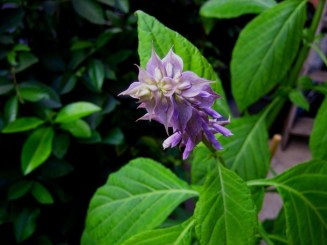
Salvia Divinorum

Salvia is known as the diviners sage. It is a herb found in cultivated gardens and has been used by the Mazatec Indians of Mexico for many years as a healing and divination tool. There are a few studies showing that micro-doses (too small for any psychoactive effect) are effective at aiding PTSD and lowering anxiety. This innocent-looking member of the mint family — whose hallucinogenic powers can dwarf those of magic mushrooms and LSD was virtually unknown outside of a small region of Central Mexico, where it has been used as a shamanic healing tool by the Mazatec Indians in Oaxaca for at least hundreds of years. The Mazatec shamans use salvia to facilitate divinatory or visionary states of consciousness during their spiritual healing sessions when psilocybin mushrooms aren’t in season. According to ethnobotanist Daniel Siebert, “The Mazatec shamans primarily take it ceremonially as a tool for gaining access to the supernatural world or what they believe to be the realm of divine beings and supernatural entities.”

salvia-1024x768

San Pedro Cactus

San Pedro Cactus was used by Peruvian shamans to heal illnesses, to see the future through its prophetic and divinatory qualities, soul retrieval, to overcome sorcery or saladera (an inexplicable run of‘bad luck’), to ensure success in one’s ventures and to rekindle love and enthusiasm for life. Even its post-Hispanic name, San Pedro, embodies these qualities because Saint Peter is the holder of the keys to Heaven and the name of the cactus therefore speaks of its ability to ‘open the gates’ into another world where those who drink it can heal, discover their divinity, and find their purpose on Earth.

We also have an account from the ethnobotanist, Richard Evans Schultes, of how San Pedro works. It is ‘in tune with beings that have supernatural powers’, he writes. ‘Participants [in ceremonies] are ‘set free from matter’ and engage in flight through cosmicregions… transported across time and distance in a rapid and safe fashion.’ He quotes an Andean shaman who describes its effects: “First, a dreamy state… then great visions, a clearing of all the faculties… then detachment, a type of visual forceinclusive of the sixth sense, the telepathic state of transmitting oneself across time and matter, like a removal of thoughts to a distant dimension.”

c286ca404183b82dd7e90b08afc95fb3

Get your own shamanistic plant enhanced Neo Meditation device now by visiting  http://www.neologicaltech.com/SearchResults.asp?cat=65

London, Jan 3 (IANS) Singer-actor Will Young is interested in visualisation meditation and once had a visitation from a dead friend.

Young learned about “visualisation meditation” while on a fasting retreat and feels the experience of seeing spirits bathed in “golden light” gives him a feeling of “complete goodness” that only being on stage comes close to replicating, reports femalefirst.co.uk.

“I went on a fasting retreat in and we did visualisation meditation and ever since then I’ve done,” Young said.

“It’s all about the light, and some people that have passed away. I had a friend who passed away two years ago, Jo McCormack, she did all my A&R for all my records, this is the first record she hasn’t done and it was really hard to not have her around.

“And immediately when she died, she popped up, and they’re bathed in light, they’ve just got like all around,” he added.

https://en-maktoob.news.yahoo.com/young-visited-dead-friend-013435938.html

I have the ID 22 Gate Key and am not disappointed. I like meditating with my neocube. “Device increase”and yes, it does. The physical sensation vibration jolt of chi energy at this moments adds to the joy of any meditation session. When I meditate with my neo cube synchronicities line up faster and better.

For a limited time the IDL-22 is 25% off. Upgrade your meditation experience and feel the supercharged power of this meditation cube.

http://www.neologicaltech.com/product_p/idl22gk.htm

BY NISHA LILIA DIU, THE DAILY TELEGRAPH JANUARY 13, 2014

Meditation: Perfect antidote to our tech-filled lives

A major study finds meditation can be as effective as antidepressants in relieving anxiety.

Photograph by: carla9 , Fotolia.com

Oh, no. Incense. There’s a juice bar in the foyer and bhangra music playing, too. It feels like I’ve stepped into some kind of space warp. Outside, the City of London. Inside… well, it’s hard to describe. Because, as I step further into the Light Centre, a “natural health” studio offering everything from acupuncture to yoga, it becomes clear that its clientele is as far from the yogurt-knitting crowd as it’s possible to get.

They’re the kind of high-powered men and women you imagine weekending (with their BlackBerries) at luxury spas. Which, come to think of it, is what the Light Centre feels like.

I’m here for my first session of mindfulness meditation, one of the centre’s most popular courses and a practice that made headlines last week. On Monday, the Journal of the American Medical Association (JAMA) published the results of a ground-breaking study that found that meditation appears to provide as much relief from some anxiety and depression symptoms as antidepressants. Dr Madhav Goyal of the John Hopkins School of Medicine, who led the research, singled out mindfulness meditation as the most effective form.

“It doesn’t surprise me at all that mindfulness performs as well as or better than medication,” says Adrian Wells, a professor of psychopathology at Manchester University and a clinical adviser to the charity Anxiety UK. The psychologist Katie Sparks agrees. “In the group work that I’ve done with sufferers of anxiety or depression, I’ve found it very beneficial because it calms the mind. It’s not a new thing,” she adds.

That’s an under-statement: mindfulness is a meditation technique that has been advocated by Buddhism for 2,500 years. Paul Christelis, the Light Centre’s course leader and a clinical psychologist, defines it as “paying attention to your experience, on purpose, in the present moment, without judgment or criticism”.

Its crossover into Western culture has been gradual. But in 2004, its use in preventing the relapse of depression was approved by the National Institute for Health and Clinical Excellence (Nice). It has rapidly gained traction since.

In the past few years, Oprah Winfrey, Arianna Huffington and Twitter co-founders Evan Williams and Biz Stone have declared themselves devotees.

OK, it’s not so surprising that a self-consciously cool company such as Facebook runs regular mindfulness sessions – but Goldman Sachs? Credit Suisse?

General Mills, the Cheerios manufacturer, has a corporate mindfulness programme with 700 members. In some business communities – notably Silicon Valley – it is so popular that you could argue that it has become a status symbol, a badge proving how busy and important your job is.

But its proponents swear by it. Ben, 32, a football-loving political adviser from Oxford, tries to set aside 15 minutes each day to meditate. “It definitely makes a difference when I do it,” he says. “It gives me more composure. I feel more clear-headed.” He was drawn to its promise of improved concentration – “my mind tends to wander” – but “the bigger thing I took away from it is it teaches you to take the rough with the smooth. Sometimes at work you feel, like, ‘this is just a nightmare’. But then you think: ‘It will be a nightmare for 10 days, then it will pass.'”

Kate, 34, works in fashion and has taken medication for many years to help manage her depression. “Medication was only going so far,” she says. “It wasn’t tackling me getting overwhelmed by my mind.” She’s been meditating for 20 minutes every morning for the past three years and says: “The emotion’s still there but instead of feeling, ‘Oh my God, I’m feeling really awful or depressed’, or whatever, you take a step back and think: ‘There’s that feeling. It will be there for a while and then it will go.'”

Paul believes mindfulness meditation “nurtures equanimity. It trains you to have an unshakeable balance of mind, so that you’re feeling everything but not getting swamped by it.”

Though I’ve never thought of it as “mindfulness”, I reckon I’m pretty good at appreciating the here and now. Many times a week I’ll note (just a little smugly) that I’m the only one looking up from my device and out of the window on my bus journeys to work. I’m a big believer in the benefits of quiet time, too: a few minutes now and then to acknowledge, and even indulge in, a little sadness, frustration or worry. So I arrive at the Light Centre thinking this will be a breeze.

The first surprise is that, aside from removing our shoes, we just sit in the clothes we came in, and on ordinary chairs. Paul rings a bell and guides us through a three-minute exercise called the “breathing space” (see box, below). It is immediately apparent that I have several newtons of tension in my shoulders. But just taking the time to actively notice how my body feels has an immensely relaxing effect.

It’s another story when we move on to observing our thoughts. We’re told to allow each thought in, approaching it with neutral curiosity. But my thoughts are a cacophony: fragments of the song I heard in the lobby, snatches of earlier conversation and lurches of panic about things I’ve got to get done later. And even though I’m usually able to let my feelings in, I normally only do it for just a moment before starting to think how I’m going to fix everything. Here it feels alien – and a little scary – just to feel things without doing anything about them.

We end the exercise by bringing our attention outwards again, tuning into sounds and smells and so on. I feel quite peculiar afterwards: hyper-alert, wide awake, almost high.

The popularity of mindfulness coincides with a spike in the incidence of depression and anxiety in Britain. Prescriptions for antidepressants are up from 33.8 million in 2007 to 50.2 million in 2012. Job insecurity, financial pressures and attachment to technology all play their part. People work longer hours, worry more and sleep less.

Constant stimulation offered by mobile devices – the average person checks their phone every six-and-a-half minutes – keeps us permanently alert, affecting our ability to concentrate, form memories and relax.

If anxiety is the modern malaise, perhaps mindfulness is the cure.

–-

How to create breathing space

This technique can be used whenever you feel unbalanced, anxious, or simply would like to feel more present. It takes no more than three minutes and can be practised at home, in the office, on the train… anywhere.

1. With eyes closed, sit in a straight-backed chair, upright, alert but relaxed. Bring your attention to your feet. Notice how they feel resting on the floor. Then, notice physical sensations in the body – on your skin, in the muscles. Next, become aware of your thinking; notice thoughts as they come and go without getting involved with the content of the thought; and then turn attention to any emotions you may be feeling. Be curious about how you’re feeling – there’s no need to fix or change how you experience. Simply notice it.

2. Now, gather your attention into your breathing. Notice the sensation of air entering the nostrils and then exiting. Keep your awareness on the natural flow of your breath for a minute or so, being really interested in the quality of each breath: texture, temperature, length… If your mind becomes distracted, don’t worry: simply bring your attention back to your breathing.

3. Now, expand your attention outwards so that you feel your whole body breathing. Feel the breath flowing through all parts of the body. You can then extend your awareness beyond your body: become aware of sounds around you, layers of sound, different pitches, volumes, textures.

http://www.theprovince.com/health/meditation+perfect+antidote+tech+filled+lives/9381893/story.html