Archive

Author Archives: James Rink

Learn some effective relaxation techniques for sleep such as mindfulness exercises, guided meditation, deep breathing and progressive muscle relaxation:

Learn some effective relaxation techniques for sleep such as mindfulness exercises, guided meditation, deep breathing and progressive muscle relaxation.
6 Things to Do Today to Sleep Better, Deeper and Longer Tonight

The key to a good night’s rest is in the choices you make all day long. Add these six moves to your daily routine today, and you’ll feel a real difference in how you wake up tomorrow.
Sleeping woman
Photo: Thinkstock
7 A.M.: Make your bed.
Your mother was right—you should tidy up those sheets: People who make their bed every day are 19 percent more likely to report a better night’s rest, according to a poll by the National Sleep Foundation. “Research shows that people with sleep problems who use their bed only for sleep improve their rest,” says Judith Davidson, PhD, author of Sink into Sleep: A Step-by-Step Workbook for Reversing Insomnia. Plus, when your bed is neat and tidy, you’re less tempted to crawl in to read a book or talk on the phone.

7:15 A.M.: Throw open the shades.
Getting natural sunlight on your face within two hours of waking helps sync your internal clock to the environment, says Robert Rosenberg, medical director of the Sleep Disorders Center in Flagstaff, Arizona. When your body is aligned with nature’s light-dark cycle, the release of melatonin will regulate, so you’ll find it easier to fall asleep at night.

12 P.M.: Take a gym break.
A recent study from Oregon State University found that at least 150 minutes of moderate to vigorous exercise per week improves sleep quality by 65 percent. Researchers believe that the natural cooldown that occurs after a workout may help hasten the decline in core body temperature that’s associated with sleep, so you’ll fall asleep more easily when you finally get in bed.

7 P.M.: Dine on whole grains.
Try adding one cup of whole wheat macaroni to your dinner a few nights a week—it contains 38 percent of your daily value of magnesium. “Magnesium has a relaxing effect on the muscles and the nervous system,” says Rosenberg. “It also helps with production and absorption of one of the main sleep-promoting neurotransmitters.”

8:30 P.M.: Take a bath.
Indulging in a relaxing nighttime ritual that separates you from the worries of the day is key. And a hot bath is a good place to start: A small study published in the journal Sleep found that older female insomniacs who took a bath at least 90 minutes before bed reported improved sleep quality.

9 P.M.: Watch TV on the couch instead of in bed.
Don’t tuck in for the night until you’re truly tired. “Every minute you spend awake—and out of your bed—increases your need for deep sleep, also known as your sleep drive,” says Colleen Carney, PhD, coauthor of the upcoming book Goodnight Mind: Turn Off Your Noisy Thoughts and Get a Good Night’s Sleep. “Spending more time in bed actually tells your body that you need less rest, so you end up cutting your sleep drive short.”

10 P.M.: Sweet dreams!

Meditate deeply with your own neo meditation device!

Before embarking on important undertakings sit quietly, calm your senses and meditate deeply. You will then be guided by the great creative power of the spirit:

Before embarking on important undertakings sit quietly, calm your senses and meditate deeply. You will then be guided by the great creative power of the spirit.

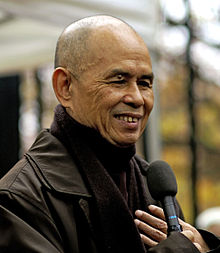
“Meditation is offering your genuine presence to yourself in every moment.” – Thich Nhat Hanh

Thích Nhất Hạnh ; born as Nguyen Xuan Bao  on October 11, 1926 is a Vietnamese Buddhist monk, teacher, author, poet and peace activist. He lives in Plum Village in the Dordogne region in the south of France, travelling internationally to give retreats and talks. He coined the term “Engaged Buddhism” in his book Vietnam: Lotus in a Sea of Fire. A long-term exile, he was given permission to make his first return trip to Vietnam in 2005.

Nhất Hạnh has published more than 100 books, including more than 40 in English. He is active in the peace movement, promoting nonviolent solutions to conflict and he also refrains from animal product consumption as a means of nonviolence towards non-human animals.

Thich Nhat Hanh 12 (cropped).jpg

Om Mani Padme Hum:

Om Mani Padme Hum
Tibetan Buddhists believe that saying the mantra (prayer), Om Mani Padme Hum, out loud or silently to oneself, invokes the powerful benevolent attention and blessings of Chenrezig, the embodiment of compassion. Viewing the written form of the mantra is said to have the same effect — it is often carved into stones, like the one pictured above, and placed where people can see them.
Spinning the written form of the mantra around in a Mani wheel (or prayer wheel) is also believed to give the same benefit as saying the mantra, and Mani wheels, small hand wheels and large wheels with millions of copies of the mantra inside, are found everywhere in the lands influenced by Tibetan Buddhism.

The Prayer Wheel: Spiritual Technology from Tibet

It is said that all the teachings of the Buddha are contained in this mantra: Om Mani Padme Hum can not really be translated into a simple phrase or sentence.

It is appropriate, though, to say a little about the mantra, so that people who want to use it in their meditation practice will have some sense of what they are doing, and people who are just curious will understand a little better what the mantra is and why it is so important to Tibetan Buddhists. We begin in the next section with some information about the mantra itself.

A year I think went by since I purchased the IDL-22 from James…I in the past bought the IDL-12 when it was available for sell. It created or manifested things I wouldn’t have been able to do myself even if I hired experts to do it for me! The IDL-12 brought my retirement to pass! I retired officially at 53 years old. I am not 58 and kicking. Getting back to the IDL-12, I loaned it out to a friend and never got it back! Well, this gave me the excuse to purchase the IDL-22.

I used it on and off but mostly off! So about two weeks ago I began to use the IDL-22 and I was using it every other day for about 5 minutes only. The 45 minutes required to set there and meditate didn’t make a whole lot of sense to me because I already told the NEO what I wanted! I let the NEO do all the work!

Within the two weeks for only 5 minutes every other day, we were told there was a land sale in the Philippines and my wife was going to get her deceased fathers inheritance in the next month or so. This was no surprise we knew the family was in gridlock for two years trying to sell the land. So my wife gave up on it. I didn’t! So I brought it to NEO to figure out and it did! She will be receiving the proceeds soon!

But someone was sent to the hospital over there and if he didn’t go the land would still be in dispute. This is why we got to be so careful using this copper device like this with human hair, we just gave the NEO the key to our DNA makeup! Once that key is turned and the event happens there is no turning it back.

http://www.neologicaltech.com/product_p/idl22gk.htm

Mitchell - Hedges Crystal Skull. One of the ancients. Engineers at Hewlett-Packard studied this artifact and determined that current human technology could not reproduce such a thing.:

Mitchell – Hedges Crystal Skull. One of the ancients. Engineers at Hewlett-Packard studied this artifact and determined that current human technology could not reproduce such a thing.
Perhaps the most famous crystal skull in the world today is the Mitchell-Hedges Crystal Skull, named after a real-life “Indiana Jones” of the 20th Century, British explorer and adventurer F. A. Mitchell-Hedges. The most distinguishable characteristic of this crystal skull is its extraordinary clarity and its detachable jaw, carved from the same piece of quartz as the rest of the skull.

Mitchell-Hedges Crystal SKull

This crystal skull was originally called the “Skull of Dunn” after an associate on one of the expeditions to Lubaantun (Belize). This is where Anna Mitchell-Hedges, at the age of 16*, claims to have found the crystal skull in the ruins of a Mayan pyramid. It was later called the “Skull of Doom” to supposedly ward off possible mal- intentioned encounters. The Mitchell-Hedges Crystal Skull has recently been renamed by the present caretaker, Bill Homann, as the “Skull of Love”.

While its history may be somewhat controversial, the fact remains that the Mitchell-Hedges Crystal Skull is a true so called “out-of-place-artifact” – meaning that despite the most evolved research, including extensive laboratory examination by Silicon Valley’s Hewlett-Pakard, no one has been able to prove it is a hoax.

Hewlett-Packard’s research concluded that, because the Mitchell-Hedges Crystal Skull was carved in disregard to the natural axis of the quartz itself (a process un-heard of in our modern time because the quartz is likely to shatter while carving), and because there are no marks from having used any metal tools, the Mitchell-Hedges skull technically should not exist.
Mitchell-Hedges

Size: 11.91 lbs / 5.4 kgs

Ancient crystal skull Mitchell-Hedges
Stone: Clear Quartz

Origin: Belize

“Skull of Love”
Discovered in 1923 – Most famous for its detachable jawbone.

*There is sometimes confusion whether the Mitchell-Hedges crystal skull was found in 1923 or 1924, and if Anna Mitchell-Hedges was 16 or 17. The story goes that Anna Mitchell-Hedges noticed a glittering, glassy-looking object lying just out of reach under the earthquake tumbled walls of what had once been an ancient Mayan temple in Lubaantun. But it was not until January 1, 1924 (on Anna Mitchell-Hedges 17th birthday) that the archeological team finally managed to recover the artifact and could fully appreciate the magnificence of the crystal skull (minus the lower jawbone portion that was found only a couple months later in a nearby area).

Perhaps because of its popularity, the authenticity of Mitchell-Hedges Crystal Skull is often challenged. The official website offers the following rebuttal:

The German origin of the skulls

Claims exist that there is “near proof” about how the skulls have been traced to a German village that specialized in crystal. Though it is indeed true that this village had many experts in working with crystals, there is no evidence that they made any or several crystal skulls. Worse, there is not a single piece of evidence which connects the French antiquities dealer Boban (or any other Mexican antiques dealer) with the crystal manufacturers of this village. The claim made by some that it is likely or almost proven that several skulls were fabricated in this village, is unsupported by evidence. It is an unsubstantiated theory, and is hence without scientific validity.

The 1943 auction of the “Skull of Doom”

Certain people have made a lot about how Mitchell-Hedges bought the skull at auction in 1943. This is an undisputed fact. But this “revelation” takes the focus away from the fact that the skull is known to have existed in 1936, when it was studied by the British Museum. The report stated that it could not trace the skull’s existence beyond 1934.

No evidence has been uncovered how Burney acquired it, or that he felt it was of recent origin. If he did acquire it as a “modern fake”, he would surely not have taken the risk and submitted it for testing by the British Museum in 1936? Furthermore, noting that Burney and Mitchell-Hedges were friends, all the available evidence is definitely in favor of Mitchell-Hedges possessing the skull in the early 1930s – which in itself does nothing for or against the age or origin of the skull.

The “controversial” Boban

Jane Walsh (curator at the Smithsonian Museum) should be commended for tracing the Paris and British Museum skull back to Eugène Boban. However, no-one has uncovered any evidence that the Mitchell-Hedges skull has any connection with Boban.

Furthermore, there is no evidence whatsoever that Boban ordered these skulls in Germany, or knew they were fake. As all art dealers, some fake artifacts did pass through his hands, but he is known to have been a man who spoke out against fakes, and felt the sale of fake artifacts was counter-productive for the market in which he was operating. He personally crusaded against frauds and fakes, such as in 1881, when he spoke out against forgeries that were being made in the suburbs of Mexico City.

A contemporary art dealer, Wilson Wilberforce Blake, at a time when he was openly claiming that everyone should buy from him, not Boban, did claim the skull was fake. No shred of evidence exists to substantiate this allegation – which had clear economical motives.

“A third generation skull”

Walsh has labeled the Mitchell-Hedges skull as a third generation skull, seeing it is the most detailed and best of the crystal skulls known to exist. She therefore considers it more modern than the Paris and British Museum skulls. It is implied therefore to be post-Boban. However, no evidence has been produced for her claim, and as the skull is allegedly even more recent than Boban’s, one would expect there to be evidence that is easily obtainable. However, none is produced.

Furthermore, as enticing as her generational approach to cataloguing the skulls is, it suggests a group of people perfecting their techniques over time and thus their end product becoming ever more refined. However, in the case of the crystal skulls, we are talking about 5 to 6 artifacts, which, if indeed of recent origins, were still apparently produced over a period of 40 to 60 years (ca. 1860-1900-1920 AD), which has innate problems:
a. one person would likely only do one skull in his lifetime;
b. there is no evidence at all to argue that the more basic skulls are older than e.g. the Mitchell-Hedges one;
c. there is no evidence that all skulls come from the same location, let alone the same “crystal factory”;
d. why would this German town only have sold to or via Boban, and not put such crystal skulls in their “general catalogue” and on sale elsewhere and locally?

Hence, this generational cataloguing is without any foundation in fact and at present pure speculation.

Evidence of wheels in production as proof of post-Columbian/modern origin

Walsh et al. claim that the presence of evidence on the skulls that wheels were used, is evidence of not only post-Columbian, but specifically modern origins.
However, this conclusion is at odds with the evidence. The crystal skull owned by Mexican Norma Redo supports a large crucifix on its top. This skull shows evidence of wheelwork. But from his analysis, archaeologist Dr Andrew Rankin has argued that the skull was sculpted from the same crystal as that of the crystal goblet from tomb no. 7 at Monte Albán, which is an uncontested archaeological find.

Furthermore, the 1571 hallmark on the crucifix is also deemed to be genuine, thus in general excluding the likelihood that this skull is of 19th century European fabrication. This suggests the skull dates from 1571 or earlier. Though it does not prove the skull is pre-Columbian, it does indicate that crystal skulls were made in Mexico before 1600.

Finally, Professor Michael D. Coe of Yale University stated that evidence of wheel markings in no way proves that the skulls are modern. He stated that although it has long been accepted that no pre-Columbian civilization used the rotary wheel, new evidence contradicts this scientific dogma. Wafer-thin obsidian ear-spools are now known to have been made using some rotary carving equipment and to be dated to the Aztec/Mixtec period. According to Chris Morton and Ceri Louise Thomas in The Mystery of the Crystal Skulls, Coe concluded (p. 226): “People who sit in scientific laboratories don’t know the full range of the culture they’re dealing with. We really don’t know half as much about these early cultures as we think we do. People need to re-examine their beliefs.”

Psychic powers, Atlantis, and alien origins

We cannot be held responsible for other people’s opinions or theories about the origins of the crystal skull. Throughout her lifetime, Anna Mitchell-Hedges was accommodating to psychics, artists and scientists who wanted to work or study the artifact. Claims that she never allowed the skull to be scientifically tested, are erroneous.

Equally, F.A. Mitchell-Hedges never stated the skull was from Atlantis, or an extra-terrestrial civilization, or like. In fact, he is on the record, in his autobiography “Danger My Ally”, as stating his conviction that the skull was a Native American artifact, used by local shamans in their “esoteric rites”.

It is interesting to note however, that even today, the guardian of the Mitchell-Hedges Crystal Skull believes it was possibly made by someone before the Mayans.

Immediate help for whatever:

Meditate Deeply with grabovoi numbers!

MAKE YOUR BUSINESS SUCCESSFUL WITH THESE CODES:

419 819 719 81 – growth of small business into medium and big business by application of methods of eternal life and development

719 419 811 – development of business in other countries

819 419 714 – independence of small business

914 819 87 – prompt help for people so they can master Technologies of New Consciousness through your own business

518 491 617 – building of an independent source for financing technologies of eternal development

419 875 – organized man applying technologies of eternal development

419 818 719 849 – developing of capabilities for predictable governance in a personal self –organization

514 918 919 – mastering of necessary knowledge and habits for leading eternal business

914 419 81 – that the time is not factor of an event.

Exchange event and time.

Event has priority over time.

419 814 – optimization of your work – on what to pay attention and what not!

419 818719 914481 –good reputation of public in a relation to your work which is directed toward eternal life and development

814 418 719 – building of harmonious relations with the family members and friends

519 498 719 41 – developing of business technologies in a production and sales according to principles of healing eternal development

519 7148 – EVERYTHING IS POSSIBLE! There is nothing impossible in this world.

894 719 78 48 – you can always achieve what you have put as an aim for all people and yourself

28914801890498 – correction of past events in business … and then focus on the following number:

91431289 – corrected past events in present and future

814 418 81 –  it is necessary to know how to use time

414 81 88 – transformation of time into money

http://www.neologicaltech.com/Products_s/40.htm

I sometimes carry my meditation device around in a plastic bag as it helped my subconscious mind to interact with device making me more predictable. I had great difficulties walking earlier when I was not using device but after I started using I feel very good and don’t feel restless.

I picked up the neo cube device is actually a et device, I felt and saw the Pleiadian civilization, so it must be a Pleiadian device. What they can do is download and imprint in your subconscious mind and it helps you design even good versions. BTW you have a lot of Pleiadians around you, you even have high vibration, you are a good person.

Try it: http://www.neologicaltech.com/Products_s/40.htm

It may seem unlikely, but a small and growing body of evidence suggests that regular meditation can indeed slow ageing, at least at a cellular level

Buddhist monks meditating. There is a small but growing body of evidence that regular meditation really can slow ageing, at least at the cellular level.
Buddhist monks meditating. There is a small but growing body of evidence that regular meditation really can slow ageing, at least at the cellular level. Photograph: Athit Perawongmetha/Reuters

Do people who meditate age more slowly? It seems unlikely on the face of it. How could sitting immobile with one’s eyes closed, perhaps focusing on the breath, possibly keep the Grim Reaper at bay? That said, the Buddha – surely the archetypal meditator – is reputed to have lived to 80, which must have been an exceptionally ripe old age in 5th century BCE India. And according to Buddhist scriptures, even after 80 years in this realm of existence, in the end it wasn’t old age that finished him off but food poisoning.

Two and a half millennia later there is a small but growing body of evidence thatregular meditation really can slow ageing – at least at the cellular level. A commonly used proxy for cellular ageing is the length of telomeres, the DNA and protein caps that protect the ends of each chromosome during cell division. These shorten slightly every time the chromosome replicates, until eventually the cell can no longer divide, becoming senescent or undergoing “apoptosis” – the cellular equivalent of suicide. Having shorter telomeres in your cells is associated with the onset of many age-related diseases, including hypertension, cardiovascular disease, type 2 diabetes and dementia. Several lifestyle factors have been found to accelerate telomere shortening, such as poor diet, lack of sleep, smoking, drinking and a sedentary lifestyle.

Chronic stress is also known to accelerate the shortening of telomeres. A study published last month found that long-term meditators had a reduced inflammatory and stress response to psychological and chemical stressors in the lab compared with a control group. By countering the effects of stress, could meditation also indirectly slow cellular ageing? An older study found increased telomere length in the immune cells of people after they took part in an intensive meditation retreat. Another revealed increased activity of an enzyme called telomerase, which rebuilds telomeres, after a similar retreat.

Now a study by Spanish researchers suggests that highly experienced Zen meditators have longer telomeres on average than people of a similar age and lifestyle. The research also hints that the psychological factors underpinning this beneficial effect were that the meditators had a more compassionate, accepting outlook on life.

Scientists at the University of Zaragoza compared 20 people who had been practising Zen meditation for an hour or more a day for at least 10 years with 20 people who had never meditated, matched for age, sex and lifestyle factors such as diet, smoking, drinking and exercise. All of them were subjected to a battery of psychological tests and gave blood samples so that the length of telomeres in their immune cells could be measured.

When the researchers crunched the data they found that the meditators’ telomeres were significantly longer than those of the controls, by an average of 10%. They then used a statistical technique called regression analysis to get an idea which factors might be directly responsible for this apparent slowing of cellular ageing. Many psychological traits were associated with having longer telomeres, including greater mindfulness skills, life satisfaction and subjective happiness. But the statistical analysis suggested that only younger age, low “experiential avoidance” and high self-compassion were directly responsible for longer telomeres.

Experiential avoidance is the natural tendency to suppress painful memories, thoughts, emotions and sensations in an effort to gain temporary relief from psychological discomfort. In fact, this mental shying away seems to cause greater problems for us in the long-run. By contrast, mindfulness – both in its original Buddhist context and in modern therapeutic programmes for treating conditions such as chronic pain, depression and drug addiction – involves turning one’s attention towards unpleasant physical and mental experiences in a spirit of nonjudgmental acceptance. So it’s particularly interesting that the Spanish study found that experiential avoidance seemingly leads to faster shortening of telomeres.

So can we add meditation to the list of lifestyle changes, alongside giving up smoking, exercising more and drinking less, that can lead to a longer, healthier life? It’s worth bearing in mind that this study only measured cellular ageing. And it was a very small study, with only 40 participants in total, which limits the conclusions that can reliably be drawn. The meditators were also exceptionally experienced, having clocked up at least a decade of practice. Ideally, a future study should randomly assign a much larger number of people who have never meditated either to a meditation programme or an equivalent activity, such as relaxation training, and compare the effects on telomere length over a much shorter period – perhaps just a few months.

There’s cause for optimism, though, that even beginners can start protecting their telomeres from the ravages of time and cell division. A study published in 2013found that just 15 minutes’ meditation in novices had immediate effects on the expression of many genes, for example increasing the activity of the gene that makes telomerase and reducing the activity of genes involved in inflammatory and stress responses. It’s amazing what sitting still with your eyes closed and focusing on your breath can do for your cells.

James Kingsland is the author of Siddhartha’s Brain: Unlocking the Ancient Science of Englightenment, which will be published on 26 April in the US and 2 June in the UK

https://www.theguardian.com/science/blog/2016/mar/03/could-meditation-really-help-slow-the-ageing-process

Here’s what’s behind the amazing physical and mental health benefits of the practice.

02/17/2016 12:00 pm ET

Whether you see meditation or prayer as the gateway to enlightenment or just a way to stay more focused at work, one thing that’s certain is that the practice comes with a whole host of physical and mental health benefits.

But what’s behind those benefits has been less clear. What’s going on in the brain when we’re sitting silently and focusing on the breath?

For the fifth episode of Next Level Living, a 10-part HuffPost Originals video series on the science behind our everyday habits, we asked scientists about what meditation and prayer do to the brain and body to create benefits like reduced stress levels, improved sleep, and, for some, mystical experiences.

“The more you do a practice like meditation or prayer, your brain physically gets thicker and it functionally works better,” Dr. Andrew Newberg, a neurotheologist and director of research at Philadelphia’s Myrna Byrd Center of Integrative Medicine, said in the video.

In his lab, Newberg took brain scans of spiritual leaders while they’re meditated or prayed in order to learn more about how the practice alters brain activity. What did he find? Concentration and language centers activate, while the parietal lobe, which helps you gain a sense of where your body is in space deactivates. And surprisingly, the thalamus — which is involved in our sensory perceptions of the outside world — is also highly active.

To learn why meditation and prayer activate the thalamus, check out the video above. For previous episodes of Next Level Living, head over to our show page.

http://www.huffingtonpost.com/entry/prayer-health-benefits-meditation_us_56c20fc4e4b08ffac125f2c5

February 20, 2016

This weekend, don’t just relax. Really take time to breathe, and focus on just your breath or the small sensations in your body as you sit still. It’s good for you, according to science.

For years, meditation has been associated with all kinds of benefits,such as increased happiness, more self-control, and better social skills. But so far, it’s been hard to quantify exactly how those benefits are linked with the act of sitting still and focusing your thoughts.

New research published (paywall) in Biological Psychiatry took at look at the physical benefits of meditation in a double-blind study with 35 adults who reported that they were experiencing high levels of stress. Researchers from Carnegie Mellon found that adults who attended a three-day meditation retreat showed slightly different patterns of connectivity in their brains afterward, particularly in the regions associated with executive control. They also experienced slight decreases in the amount of a chemical associated with stress. These results contrasted with patients selected to go to a rote relaxation workshop, who afterwards showed a slight increase in the same stress-related chemical and no changes in their brain activity.

“We’ve now seen that mindfulness meditation training can reduce inflammatory biomarkers in several initial studies, and this new work sheds light into what mindfulness training is doing to the brain to produce these inflammatory health benefits,” David Creswell, a psychologist at Carnegie Mellon and lead author of the paper, said in a press release.
 For the study, researchers identified 35 men and women who were unemployed and highly-stressed, based on a self-reported survey. They collected blood and brain scans from the participants, before sending 18 of them to a three-day meditation retreat, and the other 17 to a “sham” three-day relaxation retreat, as The New York Times (paywall) called it. Actual meditation requires participants to focus solely on any sensations in the body—even unpleasant ones like anxiety. In the mindfulness meditation retreat, participants were taught to be mindful throughout all of their activities, including eating, stretching, and even walking around. Though participants in the relaxation retreat engaged in similar activities, they did so in a “restful rather than a mindful way,” as the researchers write. In other words, rather than thinking about the activity at hand, relaxation participants focused more on ignoring their stresses instead of the tasks at hand.
Even though all participants reported feeling lighter after the course, their brain scans were different. Scans from the group that meditated showed greater measures of connectivity through parts of the brain associated with calmness and stress. Additionally, blood samples showed that the levels of Interleukin-6, a chemical associated with stress and inflammation, were slightly lower in participants who attended the meditation retreat.

The researchers concluded that meditation, and not just relaxation, was associated with changes in neural networks, which may lead to decreased amounts of Il-6, “which in turn is associated with improvements in a marker of inflammatory disease risk.”

Researchers are still unclear on the mechanisms behind this apparent connection in neural activity and inflammatory chemicals. The study’s small sample size makes it difficult to confidently extrapolate the results and the effects, though significant, were minimal. Additionally, they don’t know if the affects of a 3-day retreat are equivalent to meditating for just a few minutes on a daily basis.

There’s still a lot of work to be done to understand how and why meditation works, but it may be worth it to take the time to meditate, just a little bit. You can even do it on the subway, a place where you might need it most, regardless of its physical benefits.

http://qz.com/620839/science-finally-proves-that-meditation-makes-your-body-markedly-less-stressed/