Archive

Author Archives: James Rink

02/01/2016 10:15 pm ET
Steven SchwartzbergPh.D. clinical psychologist, dharma student, intentional nomad.
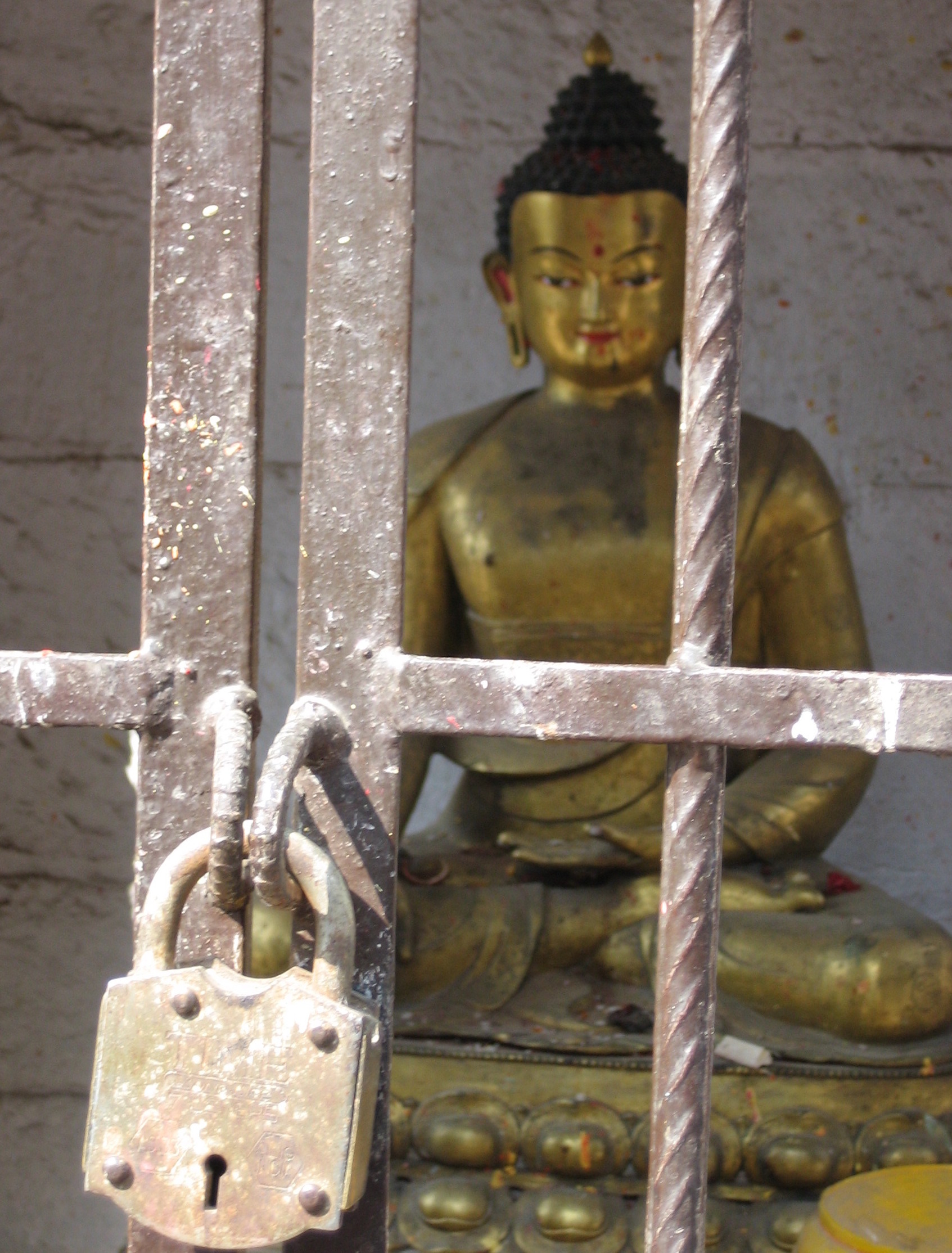
2016-02-01-1454347949-6335541-IMG_0182.JPGBy most standards, I’m a fairly experienced meditator. I meditate daily, and have for years. I’ve spent months at a time immersed in silent practice. I study it, teach it, and write about it.

I can still wonder if I’m doing it wrong.

Meditation is deeply personal. Except with the broadest brushstrokes, this intricate journey into one’s most intimate inner experience can not be translated or taught. Teachers may of course share their intuition and expertise, but it is not possible to get inside another person and co-pilot the constantly changing labyrinth of mind and heart that makes up our moment-by-moment awareness. Nobody else can steer for us a micro-course through the unending deluge of mental and physical stimuli that besets us all. The absolute inwardness of the practice leaves each practitioner to navigate the specifics on his or her own.

Nor is meditation a one-size-fits-all undertaking. Buddhism alone offers many approaches. Even within the narrower domain of vipassana – the practice that has been my framework for almost two decades – there are dozens of ways. Many road maps detail the general terrain, but a map is never the actual territory. We are each by necessity our own scout, sherpa, and surveyor in exploring the terra incognita of our deepest nature.

Then, as one develops some skill and experience with the journey – it gets harder (at least in some respects). The challenges grow more subtle. The fractal-like complexity of the mind seems never-ending. As we encounter deeper stillness we meet yet another koan: the quieting mind can paradoxically seem busier than usual, as we come to see how much more is available to our field of awareness than we usually realize.

If meditation is to be something more than well-intentioned, semi-spiritual daydreaming, the decision points become endless. When is it best simply to observe what arises in the mind/body, when best to dig into the nature of what is arising? If digging, what is the nature of this investigation, and how far is it to go? Is it beneficial to cultivate certain mind-states such as forgiveness, compassion, awe, or infinity? When does it help to apply a laser-tight focus, when to hold a longer leash? And of course, let’s not forget the most fertile and perplexing ground of all – who, where, or what is the I that does any of this?

Some teachers counsel never to steer. Do nothing, they advise. Simply observe thoughts, body sensations, and emotions. Let arise whatever arises, let subside whatever subsides. Watch, with exquisite attention; observe if possible how these arisings form and how they wither, but don’t get caught up in content. Be always, only, the consummate witness.

Other teachers encourage amplifying certain states when they are present, most notably what are called the brahma-viharas – certain qualities of human experience, such as compassion and equanimity, that in Buddhism carry elevated status. Some traditions and practices broaden this further, encouraging cultivating a range of mind/body states that might be considered beneficial or “skillful.”

The path may be easier for devotees who align themselves narrowly with a specific teacher or theory, and stick with it no matter what. I can’t know this for sure: It has never been my way. I have tried to impose a narrow allegiance on my practice but it doesn’t last long.

Still, one central choice informs my journey, which I adopted as a neophyte and never abandoned: I meditate with no goal in mind. This, too, is another paradox; the mental and physical benefits of meditation are well documented — but meditating with the explicit aim of achieving these benefits may make them more elusive. Instead, from the outset I have embraced meditation as something more radical: A daily practice outside the relentless, restless urge to accomplish something. As best as I am able, my approach is goal-less, aimless, unmeasurable. By suspending an eye on a particular destination, meditation then opens a silent window into fathomless mysteries that transcend words or logic. At least sometimes.

And so I stumble, forge, and persevere on, sailing solo, as I progress or meander through the general landscape of my innermost human nature. I keep a few road maps in my back pocket, along with helpful suggestions gleaned from current teachers, ancient masters, and other practitioners. I refer to them as needed. When I am lost, I try to remember to ask for directions.

But mostly I trust that I have not veered so far astray in a wilderness of my own design that the journey itself is misbegotten, the route washed out. The practice itself, I have come to believe, knows the way better than do I. The practice itself is my ultimate guide. My meditation teacher is meditation.

At least, this is where I place my faith.

(I spent the winter of 2012 in silence on a self-guided retreat at the Forest Refuge, a Buddhist meditation center in rural Massachusetts. This twice-monthly blog explores how intensive retreats offer a compass for everyday life).

http://www.huffingtonpost.com/steven-schwartzberg/meditation-what-can-and-c_b_9132342.html

Contrary to popular belief, meditation doesn’t always mean sitting in lotus pose with your eyes closed. In fact, most people are unaware that you can practice meditation virtually anywhere — sitting still is not a requirement.

The true beauty of meditation lies in the fact that you can make your practice perfectly suited to your personal needs. The benefits are also undeniable: Studies show the practice can prevent disease and reduce inflammation, be an effective form of treating depression and increase happiness levels. It is even thought toprevent signs of aging in the brain.

Everyone can take advantage of meditation’s perks, regardless of whether or not they want to sit in one place. Below are five types of meditation you can do on the move:

  • 1 Qigong
    FurmanAnna via Getty Images

    This ancient Chinese practice is a mental, physical and spiritual experience suited to people of all ages. Qigong’s slow movements are flowing and rhythmic, with a focus on calming the mind and maintaining steady breathing.

    The psychological and physical benefits of Qigong include pain relief, anxiety reduction and an increase in stability. Moreover, you’ll get the added benefits of meditation, which will improve your quality of life overall.

  • 2 Yoga
    Thomas Barwick via Getty Images

    There are plenty of great reasons to do yoga, like working up a sweat and increasing flexibility. However, meditation is another reason to roll out your mat.

    When you’re moving through sun salutations or trying a challenging new pose, your mind is focused and clear. This type of concentration is also one of the goals of meditation, so it’s easy to combine these two practices into one. Additionally, the ultimate objective of meditation is relaxation — and if you ask us, coming out of child’s pose is about as calming as it gets.

  • 3 Walking Meditation
    ImagesBazaar via Getty Images

    Lace up those sneakers. Focusing your thoughts on a relaxing walk is a form of meditation we can all get behind.

    The most important thing is to be in the moment during your walk — don’t let the stresses of life cloud your thoughts and break your focus. Plus, the exercise is one of the easiest ways to stay physically healthy.

  • 4 Tai Chi
    PhotoAlto/Antoine Arraou via Getty Images

    Tai Chi is a martial art, but considered by many to be a type of Qigong — it involves gentle, rhythmic movements and encourages you to strive for spiritual balance and mental clarity. Though they might seem slow, the movements, when sped up, are a form of combat.

    However, most people practice Tai Chi as a way to get moving and participate in a calming ritual. Moving with intention is a great way to focus your thoughts — a form of meditation in its own right.

  • 5 Being In Nature
    Hero Images via Getty Images

    Spending time outdoors can do wonders for your mental health — and it’s also a great way to meditate. Going hiking with the goal of relaxation can absolutely be a form of the practice.

    Spend some time in nature and focus on the present to give your brain a boost and improve your mood. It’s a powerful combination with more benefits than you might realize.

http://www.huffingtonpost.com/entry/types-of-meditation-that-dont-require-sitting-still_us_56b8f454e4b04f9b57daa841

The qualities of beauty or handsomeness can bring an intense pleasure or deep satisfaction to the mind. Those who have been blessed with beautiful genetics have done so as a karmic reward for taking care of their bodies during their past lives. To be beautiful and stay beautiful you must responsibility of your body and become the perception behind the mask.

Date Originally Released: September 16, 2011
Updated: February 3, 2016

Hosted by: James Rink

To get a neo for this meditation please visit us at.
http://www.neologicaltech.com

For more information please see
http://www.neomeditations.com

The human heart emits the strongest electromagnetic field in our body. This electromagnetic field envelops the entire body extending out in all directions, and it can be measured up to several feet outside of the body. Research from the Institute of HeartMath shows that this emotional information is encoded in this energetic field. HeartMath researchers have also seen that as we consciously focus on feeling a positive emotion – such as care, appreciation, compassion or love – it has a beneficial effect on our own health and well-being, and can have a positive affect on those around us.

Meditation is the food for the soul. The soul must be healthy,have a strong aura and using mental concentration to sense,program and direct Prana.

Cleaning Aura, when meditating always keep your eyes relaxed when closed.
1.sit with your back straight.
2.Visualize White light all over your body.
3.Visualize the 7 chakras shining like mini suns.
4.Hold for 5 minutes. This helps in getting rid of negative energy and is needed for healing magic.

Next is pranayama- Controlled breathing increase soul power,
I would suggest that you have to quit smoking/alcohol as it weakens the soul power.
1.Sit straight.
2.Breathe in your lower lungs
3.Breathe in your middle lungs
4.Breathe in your upper lungs
Hold for 6 seconds.
Exhale your lower lungs,then your middle, then your upper lungs. Do this for 8 times a day.

Next is Chakra Spinning.
Visualize each chakra like a small vortex pyramid spinning very fast.
Crown Pointing down
Sixth pointing down
Throat pointing down
Heart is shaped like a hexagram
Solar pointing up
Sacral pointing up
Base pointing up

Doing hatha yoga is important to increase the prana in white magic
Concentrate on each one spinning, hold for 5 mins.

 How to create a special place for yoga, meditation or me-time
 :: by

Want to create a quiet, inspiring space for rituals like meditation or yoga — or just a place in your home that helps you feel more connected to what’s meaningful in your life?

Creating your own sacred space lets you express your very human need for ongoing spiritual nourishment. Whether it’s at home, at work or in some “third space” such as a hotel room when traveling, everyone can benefit from creating places where they intentionally choose what surrounds them.

Your sacred space might contain a single object such as a statue, sculpture or private altar you deliberately place in a special location, or it may be an entire room or garden or even your entire home arranged with furnishings, objects and décor that have special meaning for you.

“It’s a place to be reborn and renewed every day — a place to find rest,” says Las Vegas interior designer Laura Rogers. “It’s about drawing yourself inward and getting closer to what’s in your heart.”

Rogers offers these tips on using décor, lighting, sculptures, altars, furniture and more to tangibly connect with the sacred or spiritual side of yourself.

Start by defining what “sacred” or “spiritual” means to you

If “God is in the details,” as the saying goes, the places you live and work can make your spirituality more a part of your everyday life. And that can go a long way toward helping you feel more centered, grounded and happy. Your definition of what’s sacred is as individual as a fingerprint. Yet unlike a fingerprint, your personal ideas and expression of what is sacred can evolve and change over time.

Decide what you want from your sacred space

Before you begin, think about what you’re seeking and decide how you want to use it. Do you want to:

  • Create a private sanctuary for meditation and prayer, or simply for quiet reflection?
  • Find serenity while you’re at home?
  • Call up the same peaceful feeling when you’re away by visualizing your home space?
  • Designate a shared space for connecting with others, or for ritual or ceremony?
  • Co-create a family altar that continually evolves with spontaneous contributions from each of you?
  • Deepen intimacy through regular family time in a special place?

Find inspiration in what you love

Make your sacred space personal. Choose what tastes, sounds, smells, looks and feels good to you. Choose objects that give you energy, inspire you or help you get into the ritual of your meditation, yoga, prayer or other sacred practice.

Also consider using a screen, curtain or other boundary to make your sacred space feel more contained, relaxing and personal.

Consider your personal reasons and occasions for wanting a sacred space

Creating a sacred space can be something you do once in your lifetime or every day, alone or with loved ones. Get creative with these ideas:

Seasonal rituals to celebrate and commemorate:

  • Changes of season
  • Movements of the sun, moon or stars
  • Endings and beginnings of any kind
  • Anniversaries and special occasions

Specific, one-time events:

  • To consecrate a new space or transform existing space
  • To celebrate a relationship or a success
  • To clarify an important decision or change
  • To be more present or conscious in any aspect of your life

Where should you locate your sacred space?

A single object can increase your awareness of your spirituality and connection with what is sacred to you. An entire room can invite you into your deeper self. You can create your sacred space:

Where you can see it — across from your bed, desk, sofa or kitchen table

As a small part of any room — whether it’s a single object, an arrangement or altar

Wherever you have room — if not an entire room, then a corner of a room (abamboo screen or shoji screen creates an ideal space), or even a closet

In a secluded area — such as a spare room or a corner of your bedroom reserved especially for meditation

In the garden — out of doors, when nature’s voice is what you need

What kinds of items should you include in your sacred space?

This is your personal space. Knock down walls if you need to. What speaks to you, inspires you, moves you?

  • Mementos: personal items that are meaningful to you
  • Talismans: symbols of peace and safety
  • Visual art: your own, your friends’, postcards of famous works
  • Photographs of loved ones and special places
  • Statuary: traditional symbols of divine and protective energies
  • Stones and shells that hold memories from special places
  • Candles and incense
  • Color, light, texture, fabrics, carpets, mirrors, fountains, chimes
  • Plants, flowers and other living things
  • Musical instruments and favorite calming music or ambient music CDs
  • Personal divination tools such as the I Ching, The Tarot, the Runes
  • Sacred texts or words of wisdom — from any and all faiths

Use your power of intuition

Whether your life is urban, suburban or rural, whether your home is a sprawling estate or a studio apartment, you can create a special place for simple reflection, traditional meditation, ritual and ceremony. “It all starts with a desire within me to make something beautiful,” says Rogers. “I want to make the sacred space in my house as comforting as I possibly can. I might have been inspired by a picture in a magazine, or something in a movie will trigger my thinking. I’ll go about finding another piece of furniture to do that or rearrange something and it just happens.”

Remember that this space is yours. Honor your heart’s desires. Trust your intuitionto show you where to put it, what to include, how to use it — and see where it takes you.

http://life.gaiam.com/article/make-your-space-sacred

If the soul is not purified then large amount of spiritual energies can harm us because they tend to activate dirty energies that we have inside. Master Choa Kok Sui teaches that dirty energies come from two main sources. Outside sources and inner sources.

Outside sources are food we eat, water, air and other negative influences that come from outside. Inner sources come from us and are negative emotions, words and actionss toward others and towards our self. Master Choa Kok Sui called this character building. So when practitioners purify themselves with time soul becomes more purified, larger amount of spiritual energies can come in and higher degrees of spiritual development become possible.This why in every serious spiritual practice they have strict rules what to eat and how to behave.

So when we meditate and do our spiritual practice properly(which includes purification) we actually become better people or to be more precise better servants of divine. This ensures that we don’t just get our freedom but we also help others survive, have more beautiful lives and reach spiritual freedom as well.

In higher degrees of spiritual development we reach a stage of expanded consciousness also known as nirvikalpa samadhi in Indian tradition that I have described before, when you are in a constant bliss all the time. Then after a body dies you continue your journey in a spiritual world and don’t have to incarnate on the earth again(at least for a long time). This Is because you have fulfilled what you came on earth for.

If you are interested in more information check out these books . They explain all of this in very simple manner and allow a person to understand this in an objective, scientific matter and confirm all of this with simple experiments. “Miracles through Pranic Healing” and “achieving oneness with a higher soul” .

People generally take intensive meditation courses to accelerate their spiritual progress, or to move more quickly through difficult issues they are experiencing. This raises the question, is more meditation actually better for accomplishing this? The answer is, “it depends.”

For some individuals, an intensive retreat can be quite productive, and they leave feeling very clear, peaceful and recharged.

However, for others, an intensive period of meditation can be counter-productive, due to…
1. Raising one’s energy vibration too quickly, to a level that they are not prepared to handle, and
2. Stirring up way more inner toxins than the individual can effectively process and release.

What determines the difference? There are many complex factors determining whether an individual is sufficiently prepared for an intensive or not. The most tangible of these are:
1. The state of ones nervous system and energy system – is it reasonably strong?
2. How physically grounded the person is.
3. How mentally and emotionally healthy one is.

Although this is not always easy to determine beforehand, one helpful criteria is the person’s lifestyle. Do they regularly engage in activities like physical exercise, physical work, Yoga or Tai Chi, etc.? And is their overall lifestyle reasonably healthy – non-toxic?

For those considering doing an intensive retreat, I suggest you take into account factors such as this before signing up.

But whether or not a person does an occasional intensive, I have observed that, for most people, about 20 minutes a day produces, good, steady progress.

This meditation is for organ and cellular regeneration, it can also be used for shape shifting, age regression, and altering your appearance. This may seem far out, however, you have to take into consideration that the body is constantly replacing cells every day. In fact we completely replace ourselves once every 7 years. This might give you an idea how long this may take. I have personally seen growth rates of 5 to 15 mm per year for bone and nerve tissue using hypnosis alone. However in this meditation I will be accelerating time to make the growth occur much faster.

Date Originally Released: June 24, 2011
Updated: February 3, 2016
Hosted by: James Rink

Before we begin visit our website protocol systems page and scroll down to the biokinesis mode and click on the link to find your corresponding Grabovoi Number. Write this number down or memorize it. Now let’s begin.

Find your Grabovoi Number!
http://www.neologicaltech.com/SearchResults.asp?Cat=62

To get a neo for this meditation please visit us at.
http://www.neologicaltech.com

For more information please see
http://www.neomeditations.com