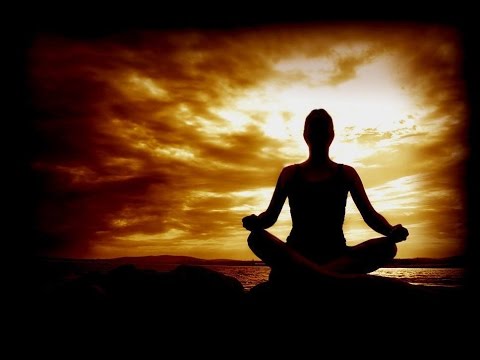
The Neo meditation cubes are working great I am able to absorb energy around me ,earlier I was just giving out energy .Its healing me!

Learn how: http://www.neologicaltech.com/Products_s/40.htm

The Neo meditation cubes are working great I am able to absorb energy around me ,earlier I was just giving out energy .Its healing me!
Learn how: http://www.neologicaltech.com/Products_s/40.htm

ABCNews.comWeezer frontman Rivers Cuomo has been writing and singing hit songs about scoring with the hot girl, nerding out “In the Garage” and longing for celebrity status in “Beverly Hills” for over two decades.
But this Grammy-winning rocker, whose catchy lyrics about relationships, promiscuity and drug use helped Weezer become what some argue as the father of today’s emo-genre, credits his success and stability to his daily practice of meditation.
“It seemed like the last thing that could possibly help me make better rock music,” Cuomo told ABC News’ Dan Harris in an interview for his new live-stream podcast, “10% Happier With Dan Harris.”
“But I was willing to give it a try, and what can I say, it helped. I’m not exactly sure why,” he continued. “It definitely improves your concentration and creativity, even in rock music … it’s about fighting through whatever internal struggles there are, self-doubt and really focusing in on what it is you’re trying to say.”
Cuomo said he first experienced meditation as a young kid in the ‘70s going to an ashram in Connecticut with his parents.
“It’s weird, because I remember asking my parents when I was a kid, ‘Are you guys hippies?’ and they would always say, ‘No.’ They didn’t identify with hippies, but then later I look back on it and it’s like, ‘It’s seems like you guys were pretty much hippies,’” Cuomo said.
By the sixth grade, Cuomo said he gave up practicing and didn’t pick it up again until he was 32 — and then he never stopped.
“I felt like my inspiration, my creativity was drying up, and I needed — I tried everything,” he said. “I needed to do something drastic.” ” After deciding to give it a try, Cuomo dove in head first and tried different meditation techniques and courses, and then began attending weeks-long meditation and made meditating a part of his daily routine. Since 2003, Cuomo said he has practiced S.N. Goenka’s Vipassana Meditation, meditating for two hours a day, every day (except for one day in 2009 when Weezer’s tour bus crashed — “I was unconscious that day,” Cuomo explained), and he takes it extremely seriously.
“So from my first course, also somewhat famously at least in Weezer circles, is I couldn’t have any sexual activity outside of lifelong committed relationships so for three years I was completely celibate after that first course,” Cuomo said. “It was tough.”
He not only credits the practice of meditation for helping him find continued music inspiration — outside of a recent stint on Tinder he said was for song research for the new album — but also for choosing to get married and have children, and even for keeping Weezer together.
“I don’t know if I ever would have gotten married without this meditation practice to settle me down and get me focused on my core values,” Cuomo said. “I feel like without the practice I wouldn’t be married, I wouldn’t have these kids, I wouldn’t be able to hang in there.
“And then again, it’s like man, how long has this band been together — 24 years now? And that’s something to be proud of,” he continued. “And it’s very hard to keep that thing going, that four-way marriage going, so I give the practice some credit for keeping me calm through any difficulties that come up.”

 Mon, 14 Mar 2016-08:43am , dna webdesk
What this woman discovers after meditating for 365 days
When Cyrena Lee read about the benefits of meditation, she decided to participate in a #100daychallenge and commit to a routine by practising it for 20 minutes everyday.
In the beginning, simply sitting and focusing on breathing for just five minutes was a challenge for her. “I would have a million thoughts crossing my mind, and get caught up in what I had to do rather than being present in the moment, ” she told dna. “It felt like trying to run a marathon without ever having trained. It wasn’t easy, and I didn’t immediately feel ‘great’ at it, but I always felt better afterwards”.
After sticking to the challenge for more than a year now, her life has completely transformed. “I left a bad relationship, got a job I’m passionate about, and even left New York City, where I lived for 10 years and for so long couldn’t imagine living elsewhere, for a life in the mountains,” she revealed.
Before incorporating meditation into her life, Lee says she was constantly distracted by worry and negative thoughts – not feeling good enough, or the feeling of wanting and lacking. However, the journey led her to a path of self-discovery, where she now feels like a different person.
“I don’t react immediately to things, I don’t get lost in anxious worry cycles and I focus far more on the positive than the negative,” she said. “Now I feel able to be mindful in all areas of my life and more able to focus on how I want to accomplish my goals. I feel more appreciative of the every day, of tiny things like having a cup of tea or trading a smile with a stranger.”
Starting her mornings by meditating, Lee says sets up her entire day. “It’s made me far more productive, centred, and creative. I no longer just roll out of bed and start my day, I wake up with purpose and clarity,” she said.
Her advice to people wanting to get started and reap the benefits as well, is to try it for a week to 30 days. Lee explains, “Meditation isn’t some obscure, unattainable practice, it truly can be for everyone even if it’s just five minutes. Nobody is too busy.”


Salesforce CEO Marc Benioff is a big fan of meditation and “mindfulness.”
He’s been meditating almost every day for the past two decades, and is one of the most vocal supporters of promoting inner peace and “mindfulness” at work.
Now, he’s taking it up a notch by putting meditation rooms on every floor of one of the new Salesforce buildings that just opened in San Francisco on Monday.
The goal: to make it easy for employees to meditate, which he believes will bring more innovative ideas.
“There’s a ‘mindfulness’ zone where employees can put their phones into a basket or whatever, and go in to an area where there’s quietness,” Benioff said at the Forbes CIO Summit held on Monday. “I think this is really important to cultivating innovation in your company.”
The idea of having built-in meditation rooms didn’t come Benioff himself — it actually came from the 30 Buddhist monks who were staying at his home in San Francisco recently, he says.
After the monks made a visit to Salesforce’s office, they told Benioff, “Everywhere we go, everybody’s talking all the time, they’re working all the time, you got to stop this.”
They first suggested turning one whole floor dedicated to just silence, so people could go up and meditate whenever they wanted to. But Benioff didn’t see how that could work, and so they “negotiated” and compromised on the idea of putting it on every floor instead. And given a lot of the “super innovative” people, like Steve Jobs, Larry Ellison, and Elon Musk are all big “meditation” fans, Benioff believes this is an important decision.
“You can go there and not have kind of a chit-chat going on in your mind for a few moments. That’s more important today because we’re in this always-on economy,” he said.

Where? Any quiet space. I feel that people are most successful with their practice if they set aside an intentional space to do it in. This can be anything from a quiet corner of a room, an entire room or even…a closet! Yes, I actually love an extra closet for this. Where ever you decide to do this now you want to claim the space for this purpose. If using a corner of a room, you can use an inexpensive screen to separate the space when you are using it or a large potted plant.
Paint your space choosing a color that is light and soothing to you and your eyes. So avoid red, orange, bright yellow, black. Choose instead calming colors such as light shades of blue, whites or muted greens.
Décor. Its nice to have a small arrangements of objects. This can be done with a small side table or DIY with a sturdy box inverted or even a space on the floor. Select a small piece of fabric to cover your table, box or floor space and then a small collection of objects that is pleasing to you will go here. Think of a special shell or stone, a candle, a small vase or scenic framed picture. This area will serve as your gazing point before and after meditation.
Another helpful item to have in your meditation space is some sort of timer. This can be a kitchen timer or use your phone but make sure the alarm alert is not a jarring sound to break you from your reverie. Consider including a book of poems or calming quotes to this area and consider choosing a line to read before or after your time here.
Also, if you have family or pets that might be disruptive to you when meditating, have a small sign or some way to indicate that you are in your space and would like to not be disturbed. (cats and dogs seem to sense that you are meditating and this is the time they MUST have your attention at all costs!).
Now you are ready to sit. And that is exactly how we refer to the practice “sitting”. So please don’t think that you have to be able to cross your legs in to a knot or any special position. Instead find a way to sit that is comfortable to you but try to do so with the spine erect, even if you need to be against a wall or chair back to do so. Rest your hands someplace on the body and then just close your eyes.
It can be challenging to stop the steady stream of thoughts so try not to become frustrated with yourself if you are unable. Instead just see if you can sit back and observe these thoughts and perhaps even notice where they arise from. Avoid “thinking” on the thoughts but instead just see them as they are and let them pass. An easy way to distract yourself from thinking thoughts is to give yourself a mantra to repeat in your mind as your breath. As simple as “in” and “out”, “let” and “go” or “here” and “now”. It can be whatever you might see as helpful to how you are feeling at that moment.
Start off with small goals like meditating for 5 minutes and see if you can build up to 10, 20 or 30. It might be nice to keep a journal and write down your feelings before and after and even noticing the difference on the days that you do not practice at all.
Check out my website for more tips on meditation, yoga and all things related to natural wellness! Michelefife.com
http://wotv4women.com/2016/03/13/how-to-create-a-zen-worthy-meditation-room/

Today, meditation is often suggested as a way to combat the mental ill effects of the digital age and our continuous partial attention lifestyle. But meditation is capable of so much more than staving off unwanted side effects from our new way of life. Many well-known and successful entrepreneurs have used meditation to their advantage. It helps to clear away the unimportant chatter of the mind and focus it on the important problems.
Mindfulness is a simple form of meditation that consists of closing your eyes and breathing in and out in a quiet environment, slowly but deeply, until you feel relaxed enough to contemplate your feelings, thoughts and issues of the day.
Your mind can experience many emotions in a single day, sometimes even subconsciously. Without examination these emotions can become apparent in the form of boredom, depression, stress (mental or otherwise), lack of motivation — even outbursts. A clear mind is a focused mind.
There are many resources that will help you learn the technique of mindfulness meditation in greater depth, and you’re encouraged to seek them out and do so. But for the busy entrepreneur who hasn’t yet had any experience with the benefits of the practice, here’s what you need to know to be able to try it out right now and start getting acquainted with this essential tool.
In order to better understand what mindfulness meditation is, let’s talk about what it isn’t.
As an example, you can meditate for only 10 minutes a day during your morning commute, wearing your ordinary work clothes.
Mindfulness can help you to examine your mental strains and anxieties. Anxiety is a terrible affliction that eats away at you and becomes worse the longer you leave it. Meditation offers you the chance to see firsthand what’s causing it; after that you can begin to construct a solution and ultimately lower your stress levels. Eventually, if you allow your anxieties to grow, your mental stress will turn into physicalstress and fatigue.

A troubled or clouded mind tends to make you feel disconnected from the world — more specifically, from those close to you. By meditating on your thoughts and feelings for only a short while every day, you can be free to engage in meaningful conversations, rather than staring into a blank space while your loved ones gradually begin to give up trying to make conversation with you.
In fact, the core aim of mindfulness meditation is to help you focus on the tasks at hand. Not only can it can improve your relationships with others, it can make you more compassionate, more empathetic, more motivated, and significantly happier.
It’s natural to develop bad habits over time. Whether its late-night binging or checking Facebook during work hours, we rarely acknowledge our bad habits on a superconscious level; we know we shouldn’t be doing it, but we’re not actively sitting down and saying to ourselves, “I shouldn’t be doing this because…”.
Meditation can offer you self-awareness, and in turn help you to identify bad habits in your routine behaviour.
For many of us, one of those bad habits is eating bad food. Junk food sends your brain’s “reward system” into total meltdown, which is why we have the tendency to become addicted to it so easily. Bad food generally makes us feel temporarily happier (by releasing more dopamine hormones) than healthier food does, and the more you reward yourself with it, the more acceptable it becomes to you.
Sadly, mindfulness doesn’t release dopamine in the same way (though studies suggest that with consistent practice, meditation does have substantial beneficial effects on our dopaminergic reward systems). But rather than acting as a direct substitute for cheap dopamine fixes, you can meditate on your habits and try to rewire your brain into finding surrogate sources for it. Watching television, listening to music, browsing the internet or reading a book can act as an alternative way of finding dopamine, which is released in the body every time you “feed” your brain with new information.
By recognising your habits first, you can change them.

Mindfulness meditation starts with breathing. You can meditate anywhere really, but it is best to be somewhere quiet, where you won’t be distracted by the sounds of what’s going on around you.
Over time you can challenge your mindfulness skills by trying to meditate in crowded or noisy spaces, but if you’re starting out it’s best to choose a comfortable, quiet spot in your home and either close your eyes or dim the lights. Breath in and out slowly (but deeply) until your mind begins to feel vacant and relaxed.
Quick tip: sit up straight, and with confidence. Straighten, but don’t stiffen, and place your hands assertively on your legs, regardless of whether you’re sitting up or sitting cross-legged.
Problems — we all have them. Mindfulness is not about solving them per se, but rather trying to understand why we feel a certain way, acknowledging the issues and coming to terms with the facts and fiction of those issues. Anxiety and stress leads to irrational thinking, irrational thinking leads to rumination, and rumination leads you to believe that your issues are far worse than they actually are. Mindfulness meditation calms you to the point where you can think rationally.
If you feel like you’re becoming irritated or emotionally attached to an issue, stop thinking about it and simply start at the beginning again. Concentrate only on breathing until you feel like you can explore the issue rationally again.
Mindfulness meditation isn’t only about ridding yourself of negative, stressful thoughts. It’s totally okay — actually, it’s completely encouraged to take a few moments of your day to focus on what’s going splendidly and what you have to look forward to. Going on holiday? Is business booming this month? Having a baby? Productivity is a direct result of motivation, which is a direct result of genuine, unadulterated happiness.
Mindfulness is the most basic form of meditation. Even without ambient sounds, aromatic smells or deep-tissue massages, you can experience total clarity simply by examining your thoughts rationally. 10 minutes of your time each day is a bargain investment to make if your mindful meditation results in a stress-free, motivated, focused, and healthy mind.
I wish to express my highest praise to you as you are a credit to all Life Endowed with Mind. Bless you for your efforts to create a freer beautiful world for all even at the risk of your life. Your website is a cornucopia of wealth and knowledge. Good show man.
Never forget the Good is vastly more powerful than the Evil. Your prayer and meditations may have been the deciding factor in the take out of some DUMB’s. The multiverse needs more heroes such as you. I am not a MK person, just a simple man who loves the truth above ALL else. You have enriched my life. Thanks!

Learn how meditaiton devices can help you! http://www.neologicaltech.com/Products_s/40.htm
It sounded gimmicky, but also too fascinating to miss.


I’ve tried meditation, trust me. I’ve downloaded the meditation apps. I’ve attended meditation classes. I’ve even tried a fancy EEG-powered headband meant to train my brain to quiet itself. Blame New York City, blame the noise, blame my mind always fixated on dinner that night, work assignments, and what’s going to happen on the next episode of whatever I’m Netflix bingeing, but I could never achieve that calm and clarity these services promised. It was only when I found myself swinging a hula hoop over my head that I really got a sense of what all the hype is about.
Before I headed to Oahu for the yoga festival Wanderlust, I took a look at the lineup of instructors and speakers and one person stuck out: Jinju Dasalla. In her bio, I read that part of what she taught was dancing with the hula hoop to “re-pattern the nervous system and release trauma.” It sounded gimmicky, but also too fascinating to miss. So, I signed up for her workshop.
It was 9 a.m. on a Friday morning and there was a surprisingly big group, some people even barefoot, spread out in a circle across the dewy grass. We each grabbed a striped hula hoop and took a few minutes to get familiar with it again–I haven’t touched one since I was in elementary school. I positioned it around my waist and swung my hips in a circular motion, laughing self-consciously while witnessing 30 or so adults doing the same.

IT WAS LIKE SOMETHING OUT OF CIRQUE DU SOLEIL.
Then, Dasalla stepped to the center with partner to demonstrate the incredibly graceful routine we’d learn. She swung her hula hoop around her waist and over her head, back and forth between the two arms, down low, up high, spun rapidly, and jumped through it all the while maintaining the allure of a ballet dancer. It was like something out of Cirque du Soleil. Dasalla, a petite, jovial woman in layers of beads, a gold halter top, and billowing maroon pants, guided us through the steps one by one. I was immediately doubtful I’d be able to replicate the routine and frankly wasn’t quite sure of the point (although it mesmerized me). She turned up the volume of her upbeat music. “Why don’t you dance? Freestyle!” she encouraged the group with a wide grin. Some people really enthusiastically wound their waists around and shook their limbs (they’re probably the folks who know how to meditate, I thought). I swayed left and right a bit more timidly in the confines of my hoop.

Dasalla is the co-founder of Soul Flow Arts, a company she founded with her husband, Nova Dasalla, in 2012. She has a PhD in neuroscience, a lifelong love for dance, and a mission to educate health professionals, coaches, yoga teachers, and therapists on the benefits of “play.” Also a life coach, Dasalla hosts workshops and retreats where she teaches people how to dance with the poi (using fire) and the hula hoop.
IF YOU CONSCIOUSLY LIFT THE HEART, BRING THE SHOULDERS BACK, BREATHE DEEP, AND THIS IS ALL YOU DO, YOU LITERALLY CHANGE THE NEUROCHEMISTRY OF YOUR BRAIN.
When I later sat down with Dasalla, I admitted feeling apprehensive toward the beginning of class. She simply smiled and demonstrated something she had once learned from an instructor: She slouched, squeezed in her shoulders and crossed her arms over her chest. “Try yelling, ‘I’m so happy!’ while in this position,” she said, then stood up and opened her arms and chest wide open to the sky, “Now try doing this and screaming ‘I’m depressed!’ It just doesn’t work.” Posture, she says, is just one way the mind and body connect. “It affects the neurochemistry,” Dasalla explains, “Constantly being constricted in the chest and in the neck holds trauma and triggers cortisol. But if you consciously lift the heart, bring the shoulders back, breathe deep, and this is all you do”–as we did during her hoop class–”you literally change the neurochemistry of your brain, of your heart. You increase the levels of serotonin, dopamine, oxytocin, all the good endorphins, and then this changes the way you see things psychologically and the world sees you change, so it‘s synergistic and symbiotic.”

Dasalla introduced me to the notion of neuroplasticity–the idea that patterns in the brain are changeable even through adulthood. “Sometimes the patterns we learn, maybe at a younger age to protect us especially more at an emotional level, they really close us up,” she says, “These behaviors all come down to literally neurons connecting with different parts of the brain. You can break that and rewire it.” Here’s where the hula hoop comes in.
(The whole video above is worth watching but skip to 1:20 for the really cool stuff).Hula hoops encourage contralateral movement, which exercises muscles on the opposite side of the body from one another. Using the hoops, she says is “scrambling everything up and forcing engagement of both the right brain and left brain–this isn’t something we do as adults, normally” since we adopt dominant sides. Using both sides of the brain promotes brain functioning by increasing the number of neural pathways in the brain, which is linked to reducing anxiety and depression. The movements Dasalla teaches lead to a “whole-brain functioning state” that helps get you into a mindset that allows you to repattern your subconscious thinking. In my case, that meant letting go of being self-conscious during class (something I commonly experience not just when I’m awkwardly dancing with a hula hoop, but also in other fitness classes where I constantly compare my body, my strength, etc. to other women).
THE GOAL EITHER WAY IS TO KNOW WHATEVER IS GOING TO GET THAT PERSON INTO THE PRESENT MOMENT STATE. TO FLOW.
It’s a simplistic explanation for a really intricate scientific phenomenon, but the basic idea is that getting your body to dance and “play,” as Dasalla identifies it, helps you focus. How is that different from sitting on a cushion and reserving five minutes to think or, rather, not think? “The goal either way is to know whatever is going to get that person into the present moment state. To flow,” she explains. “I think that’s why I gravitated toward the hoop because it forced me to think, “Ok, if I get out of the present moment right now, I’m gonna get hit,” she says before chuckling, “Try fire dancing.”

That self-consciousness I had at the start of class manifested itself in my physical motions; I kept looking around at others, didn’t want to move toward the center of the circle, or freestyle dance. But about an hour into our 90-minute class, something lifted in me. When we got to try Dasalla’s choreography on our own, I practiced catching the hoop mid-hula, balanced it with my arms outstretched behind me, switched the hoop left and right, and that’s when I realized it: I was meditating. My mind was quiet, blocking out anything that didn’t have to do with that present moment. Nothing was going through it as I allowed muscle memory to settle deeper while playing with the hoop. I was having fun and, at the end of it, felt a release I’d only previously felt at the end of a yoga classes during savasana.
Those big motions using the hoop were something I wasn’t used to in day-to-day, cramped city life. “The hoop builds confidence. It’s like saying ‘I’m here! And I’m going to take up space!” Dasalla says, “If we are invited to look at the poi, or the hoop, as an extension of ourselves and to really open up and to remember how big we are, how important every single one of us is to the bigger picture, then it is a beautiful thing.” While I don’t know if I’m going to actually buy a hula hoop (though if I did, I could find one as low as $6 online), taking this class did convince me to reserve time for regularly playing or dancing. It’s the best way to get me to that state of clarity that an app and even whole meditation studios couldn’t deliver.
http://www.elle.com/beauty/health-fitness/a34764/hula-hoop-meditation-soul-flow-arts/
First confession… I ain’t a guru. And, if you come across a teacher who says they are, there is a high probability that you need to hightail it outta there.
So, let me introduce myself and my meditation-ness and my un-guru-ness. I have been called a meditation “expert,” and I feel cool with that. I have been a hard-core practitioner for almost two decades; my first instructor/teacher of six years was a powerful, grounded yet highly spiritual former psychologist; and I have had my own meditation-based company for almost a decade. I teach corporate classes, instruct workshops, lead retreats, teach kids. Yadda, yadda, yadda. My point here isn’t to give you a resume but to give you the meat of my experience. And, let’s add thefilet mignon, I teach individuals how to live from the heart, create community, to love the uncomfortableness of being uncomfortable and how to live a freakin’ perfect life.
Confession #2… Apparently, I do eat meat.
Confession #3… Okay, so that freakin’ perfect life I mention above — I live it, but I am NOT perfect. Sometimes folks have a tendency to think because I can be very Zen or because I do what I do, that I am impervious to challenges and glide through the jungle yelping like a scantily clad Tarzan.
My new chiropractor seemed amazed when viewing my initial X-ray several months ago. My back and nervous system were fairly out of whack, and he expressed an oOoo ahh surprise knowing that I teach meditation. If only he knew what an intense person I can be. Meditation has saved me from myself but it is a life-long process of healing, rediscovery, adjustment and readjustment.
So, let’s get back to that perfect life scenario… what the heck is that then? Well, it is a “real” life that is sometimes messy, sometimes hard, sometimes invigorating, sometimes awesome and sometimes exasperating. And, when we live it in perfection, that means that we see the yum yum in anything and everything. We move from a periscoped view to a kaleidoscoped perspective… seeing striking, patch worked beauty in things that other people may only see in black and white.
My perfect freakin’ life contains a special needs child who can be super duper challenging, a lovely husband whom I fight with who expressed recently… when I was stressed… that I should consider finding a meditation teacher (!), a pimple that currently has taken residence under my nose and these ugly moles that have decided to build little mole condos on my back. Ok, yeah, I am getting personal here. I LIVE to get personal. That IS perfection.
Confession #4… Okay, so yeah, I also apparently enjoy making confessions. And why? Because it is so important!! My practitioners seek me out because they know they are not going to be sitting with a person who seems elevated, who tries to come off as “more.” I continually share the hard parts of my life or the things I am struggling with. I realize every day that we are all in this together and what affects me also affects others. And, when we share on a healthy and grounded level, we can move mountains. I know my students intimately, they trust me with their stuff ’cause they also know my stuff. No hidden agendas, no walls, no nothing. And, if there are walls, we slowly and gently break them down.
Confession #5… I am not what you expect. And, if you think you’ve figured me out, I will surprise you. (I surprise myself. Tee hee.)
Confession #6… I enjoyed writing this better than I like truffle oil covered French fries. They are my new fav! Until next time…
Kids use meditation to fight stress. 9NEWS at 8 a.m. 3/7/16.
434
DENVER – Do you remember your first day of middle school? Nervously walking through the halls … worried you’d be late for a class … forgetting your locker combination. We all experienced the stressful transition.
Katie Hostetter experienced it too. But the 12-year-old had one thing that kids in the 80s and 90s didn’t have: Meditation.
“That helped with (my transition to middle school),” she said. “I think it has definitely helped me in my everyday life.”
Katie started meditating when she was 11. Her mother, who has been involved in meditation for 20 years, brought the tween with her one day to the Kadampa Meditation Center in downtown Denver. The group hosts free kids’ classes on Sundays, while an adult class is simultaneously happening in another room.
“I thought Katie might like it,” her mother, Erica Murdock, said. “It’s a great skill [that] I wish all kids would learn.”
It appears that more kids are learning meditation. Psychologists point to studies that show today’s kid is more stressed than previous generations. Some are turning to meditation to restore inner peace.
“Meditation helps children to be able to focus and to be able to self-regulate through mindfulness,” Kelsang Pagma, a Buddhist nun who teaches the kids’ meditation class at Kadampa, said. “They can look at what’s going on in their minds. Rather than let their feelings control them they can learn how to control their own feelings.”
The instructor has seen meditation affect children’s behavior as well as their performance at school.
“Kids can stay focused longer on their schoolwork and not get so frustrated if they don’t understand something,” she said.
Pagma says, the first step to helping a child meditate is finding a quiet place that he or she can go to for each meditation session.
“Close your eyes and focus on your breath. It’s good not to close your eyes all the way, just let a little bit of light in so that you don’t fall asleep.”
That focus on the breath should remain constant, teaching children to let thoughts float in and out of their minds, like clouds. Experts say, even if kids can only sit still for a couple of minutes, it can still be a successful meditation session.
“We’ve had kids here as young as two years old,” Pagma said, adding that reductions in anxiety and stress are pretty coming among the kids who she’s seen meditate.
Katie Hostetter agrees that meditation can be good for kids of all ages. She puts it to use in her daily life.
“When I get mad a lot, I just find it helpful to breathe,” the middle schooler said, noting that it’s not hard for other kids to learn to meditate.
“Basically, just close your eyes and try to concentrate on the breathing,” she said. “Eventually it just comes naturally.”
To learn more about Kadampa Meditation Center, visit: http://bit.ly/1RtqfGO.
For information on the free kids’ meditation class on Sundays from 10 to 11:30 a.m., visit: http://bit.ly/1QwAeyy.
Copyright 2016 KUSA
http://www.9news.com/life/moms/kids-turn-to-meditation-to-stay-calm/68041254

 neomeditations.com